
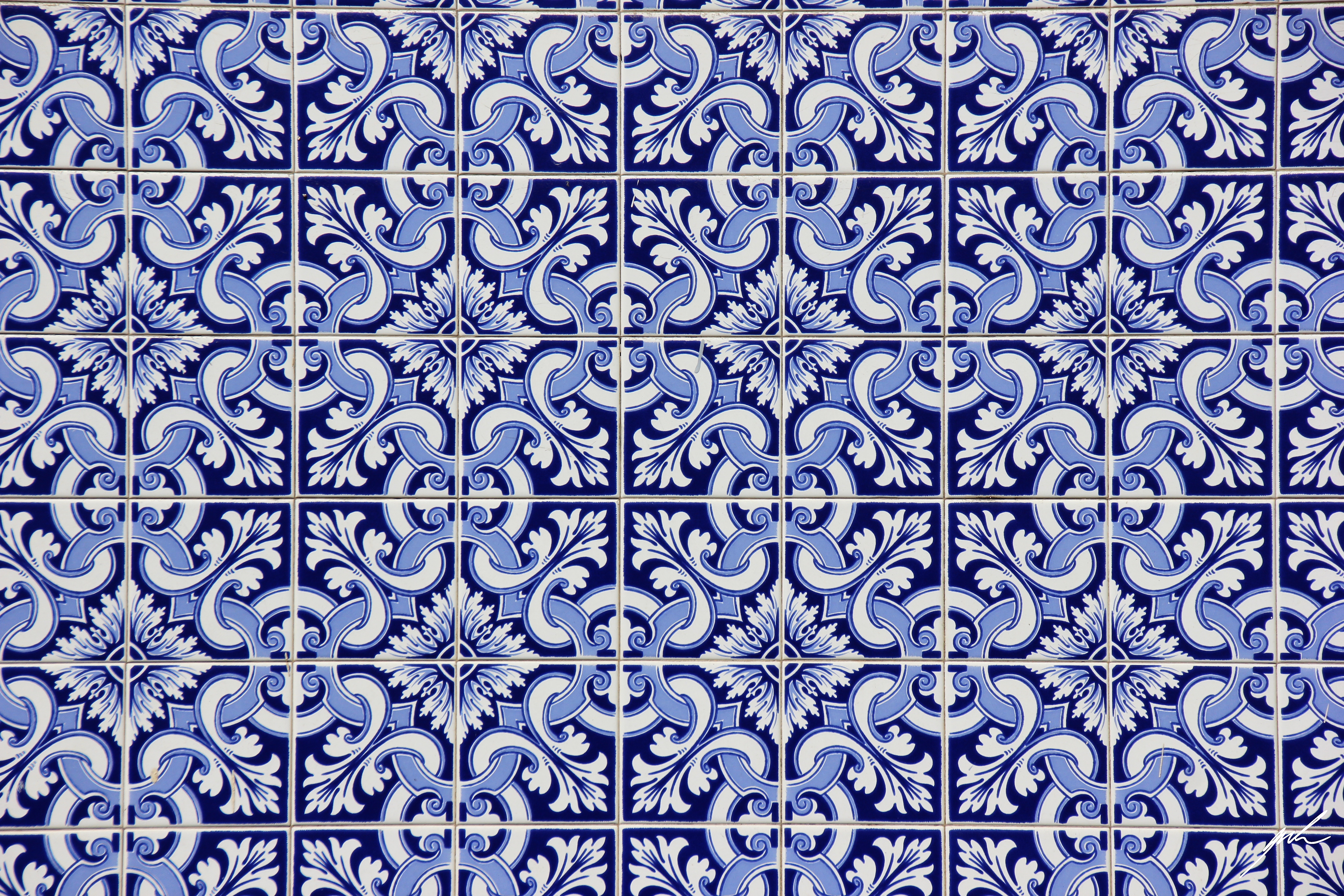
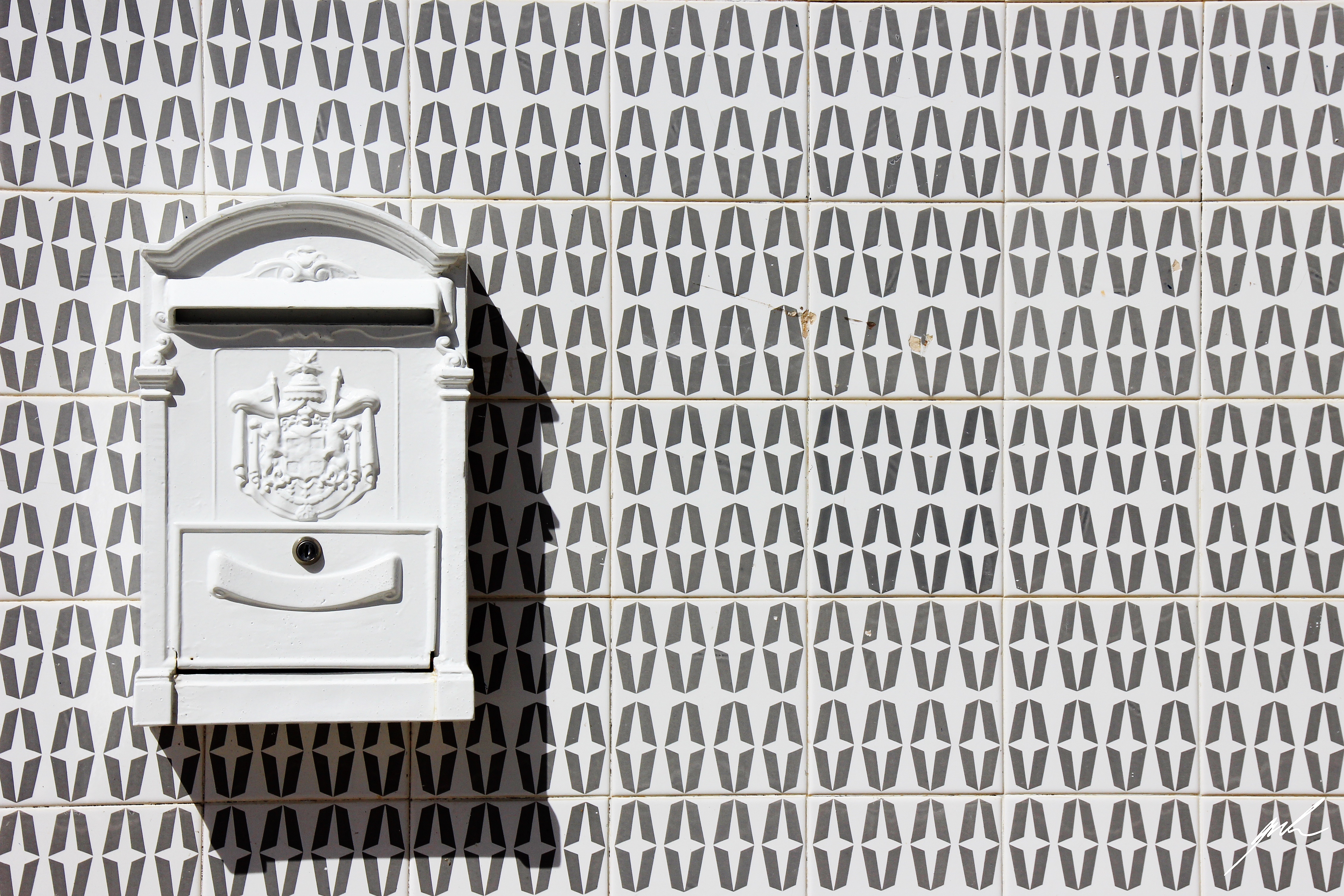
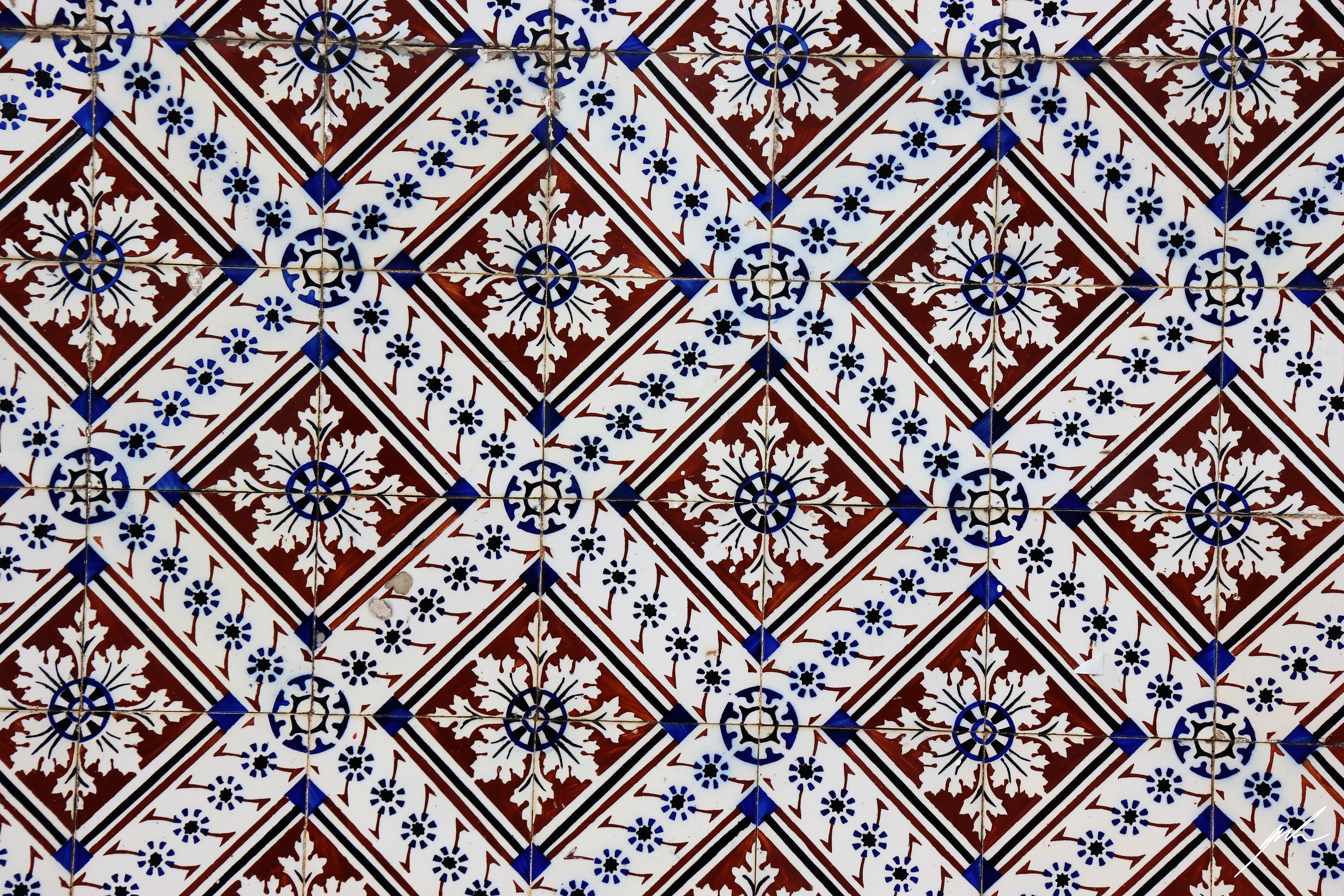
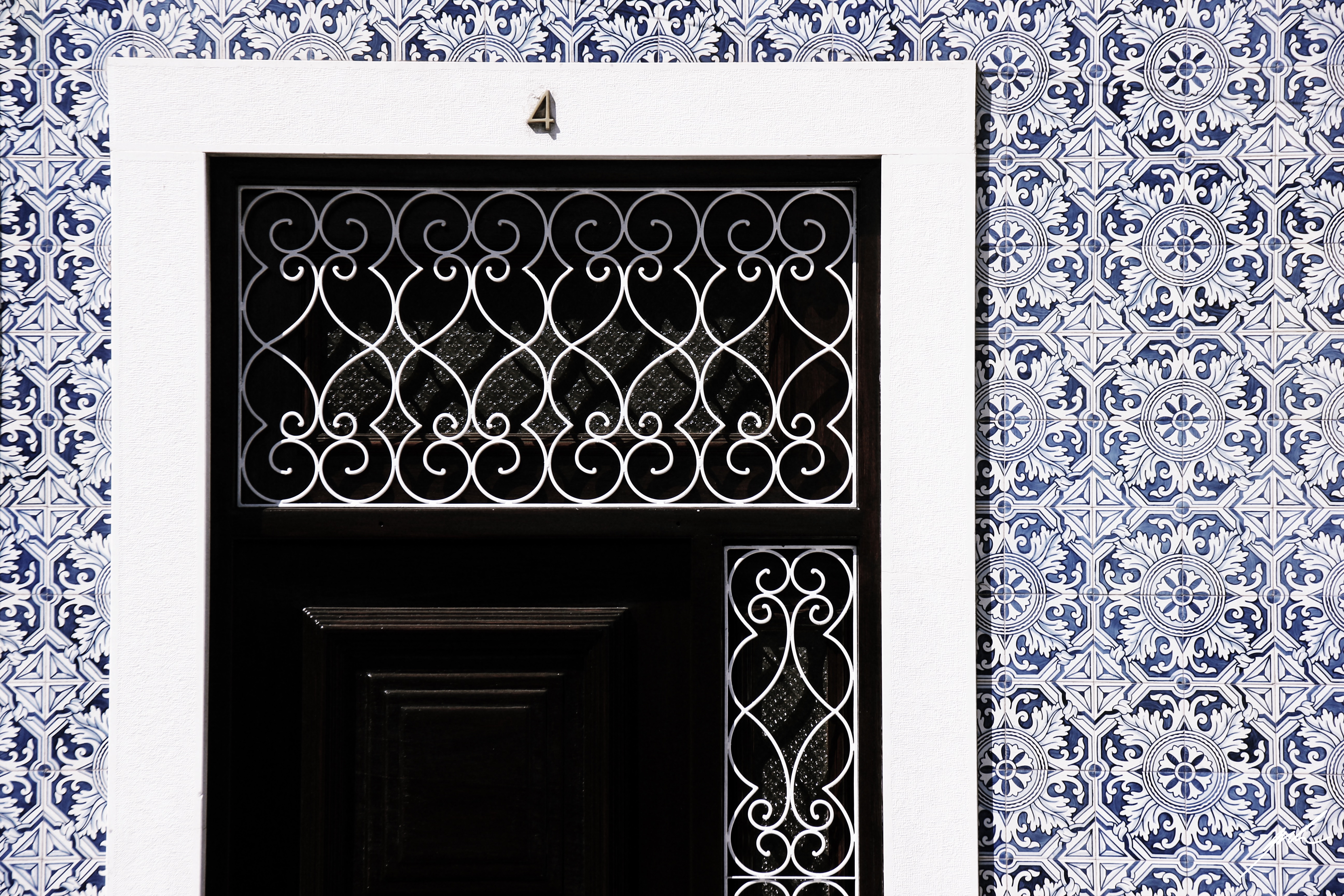
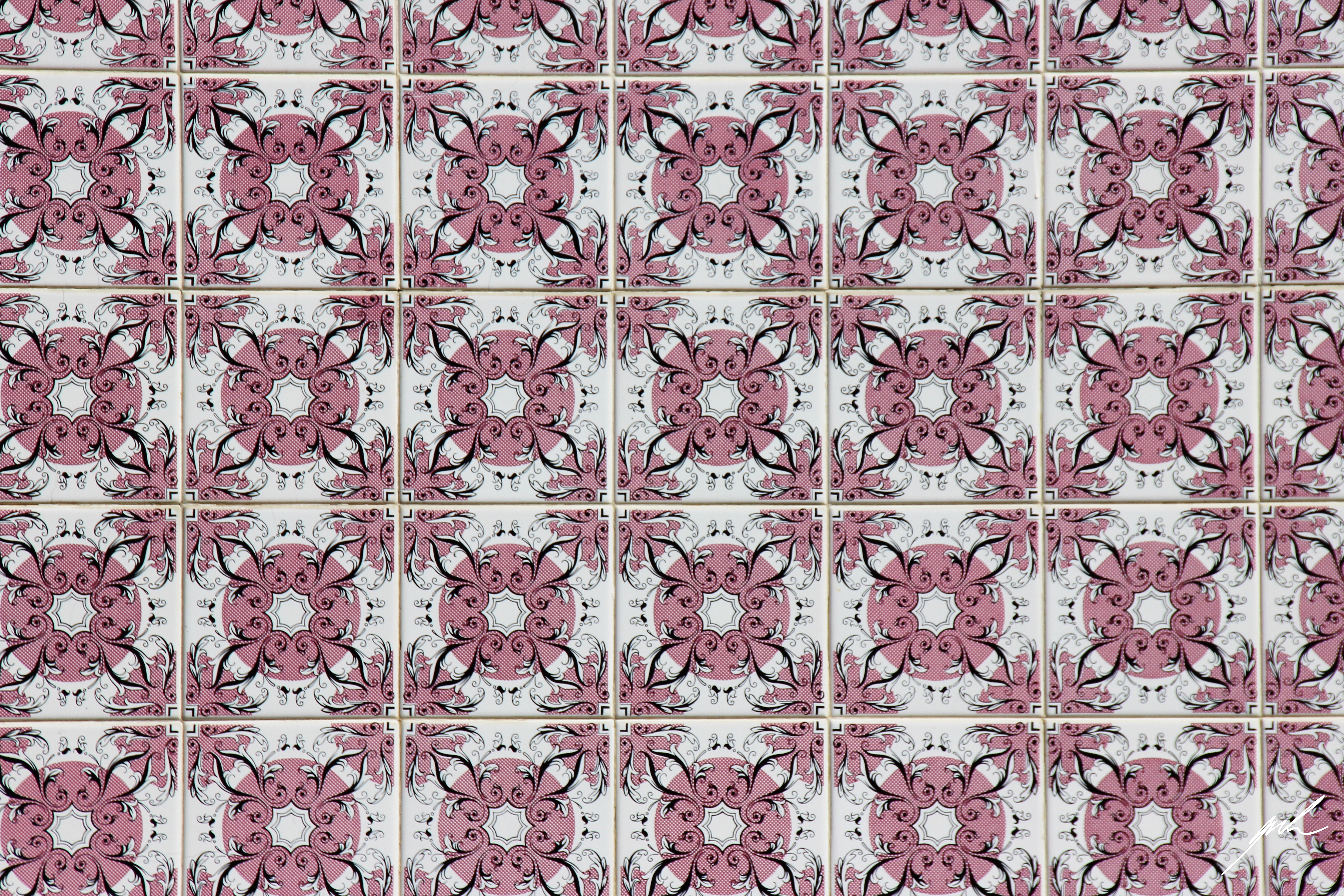
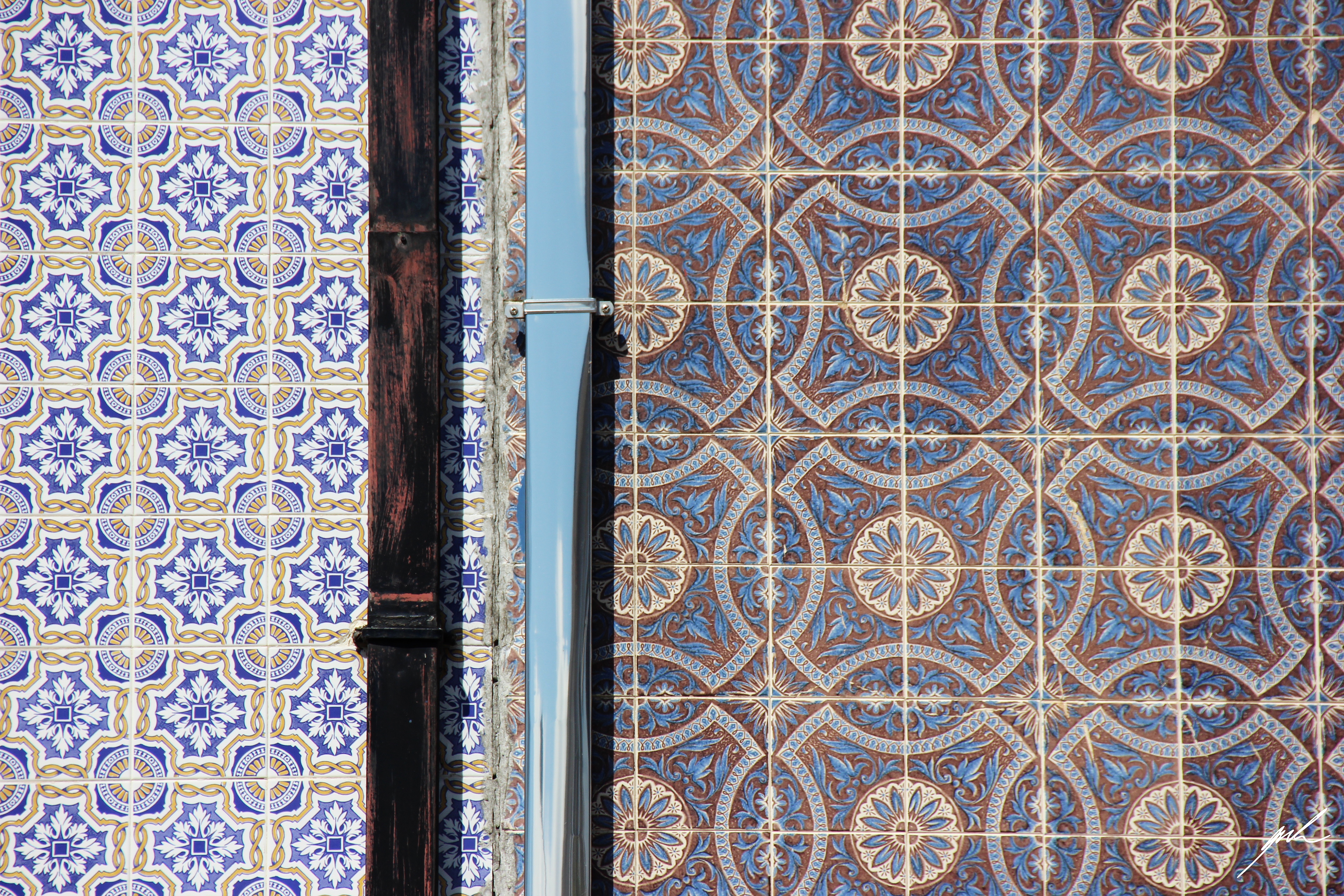
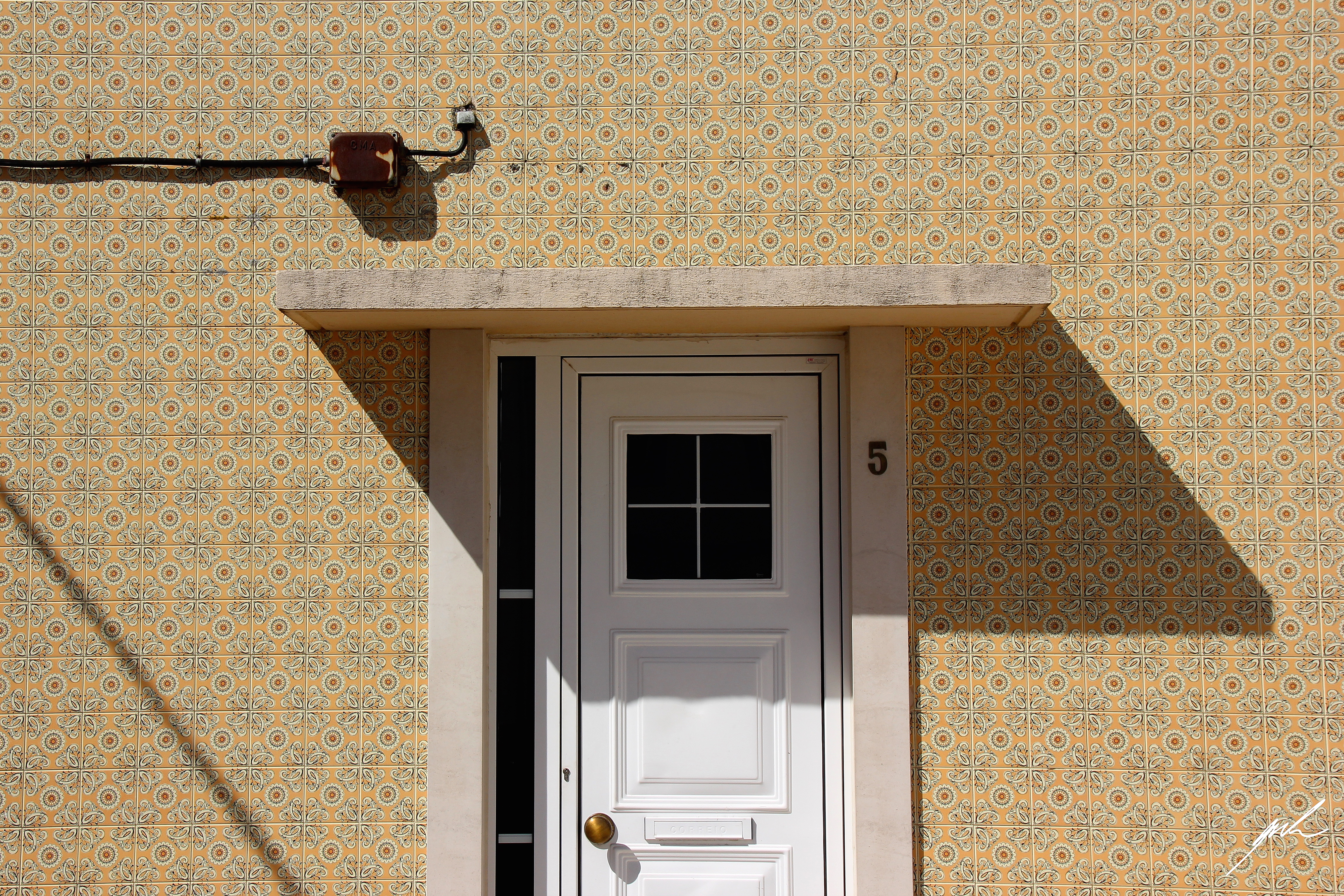
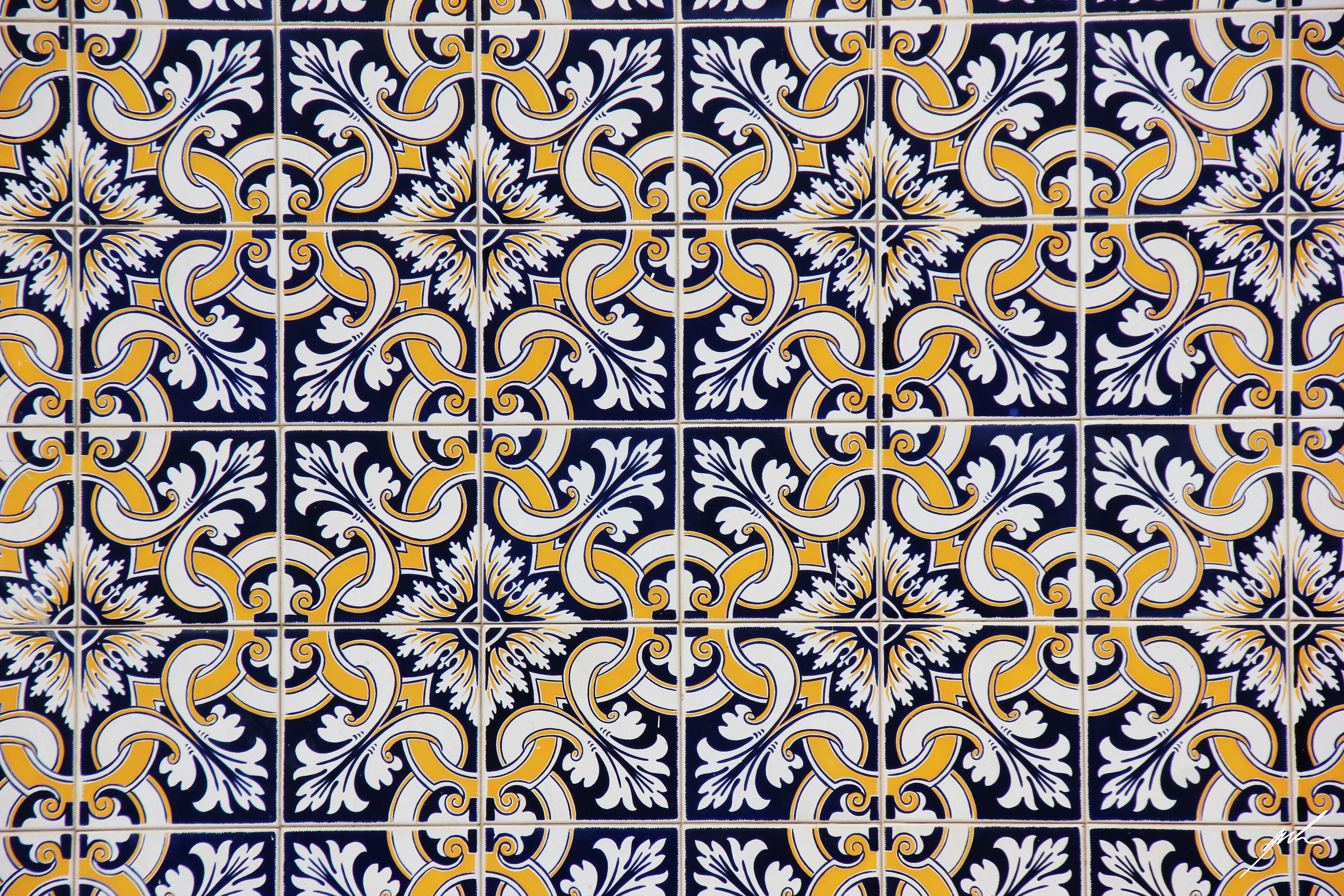
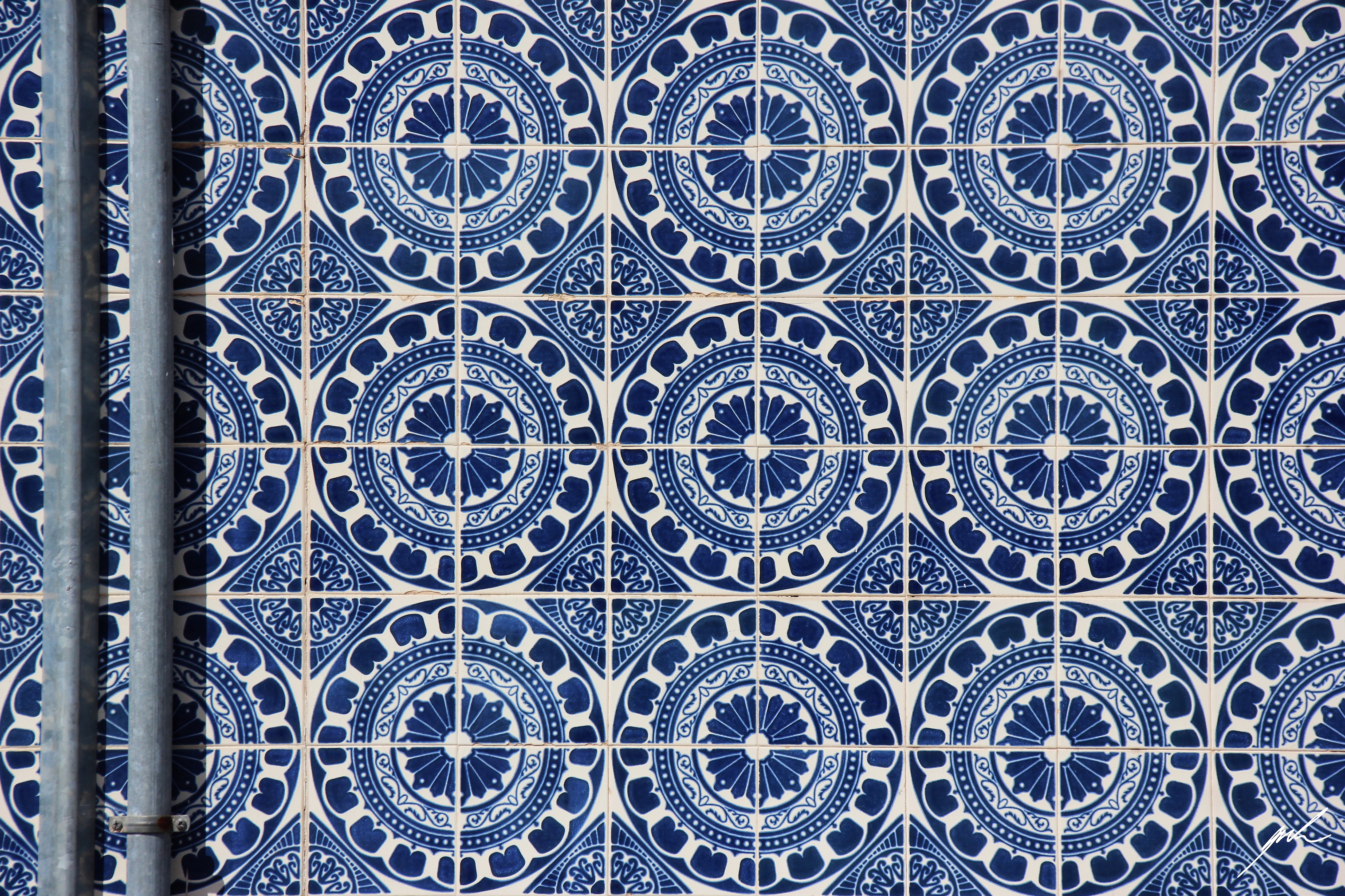
 ecorative building façades composed of thin-glazed ceramic tiles are considered a national art form in Portugal with a long historical tradition dating back to Arabic times. In Português they are called “Azulejos”, probably stemming from the Arabic “al zulaij” meaning small polished stone. In fact, the technique was adapted from Moorish decorative art in the early 16th century and gained popularity quickly in the aspiring Portuguese architecture of the time. Still today, many houses and churches are decorated with these beautiful works of art produced over time by many tile maker workshops in different parts of the country (and in other Portuguese-speaking countries like Brazil). Probably, there are almost as many patterns as there are Bacalhau receipts, but maybe that’s slightly exaggerated 😉 Interestingly, though their use is not purely decorative, the tiles also have practical gains as they help control the temperature within the covered buildings.
I didn’t get to photograph all of the tile houses I passed by as that would definitely be a lifetime task (someone out there is attempting, I am sure), but some of the artwork caught my eye while living and traveling in Portugal at the beginning of the year. I will post another collection with Azulejos specifically from Lisbon; the following are from all over the country (Porto, Coimbra, Aveiro, Guimaraes, Lisbon, etc.).

 Michael Hoffman Photography
Pingback: Azulejos of Lisbon | Michael Hoffman Photography
Pingback: Revisiting Lisboa Pt. I | Photography