
Jubilant Baroque: Vierzehnheiligen

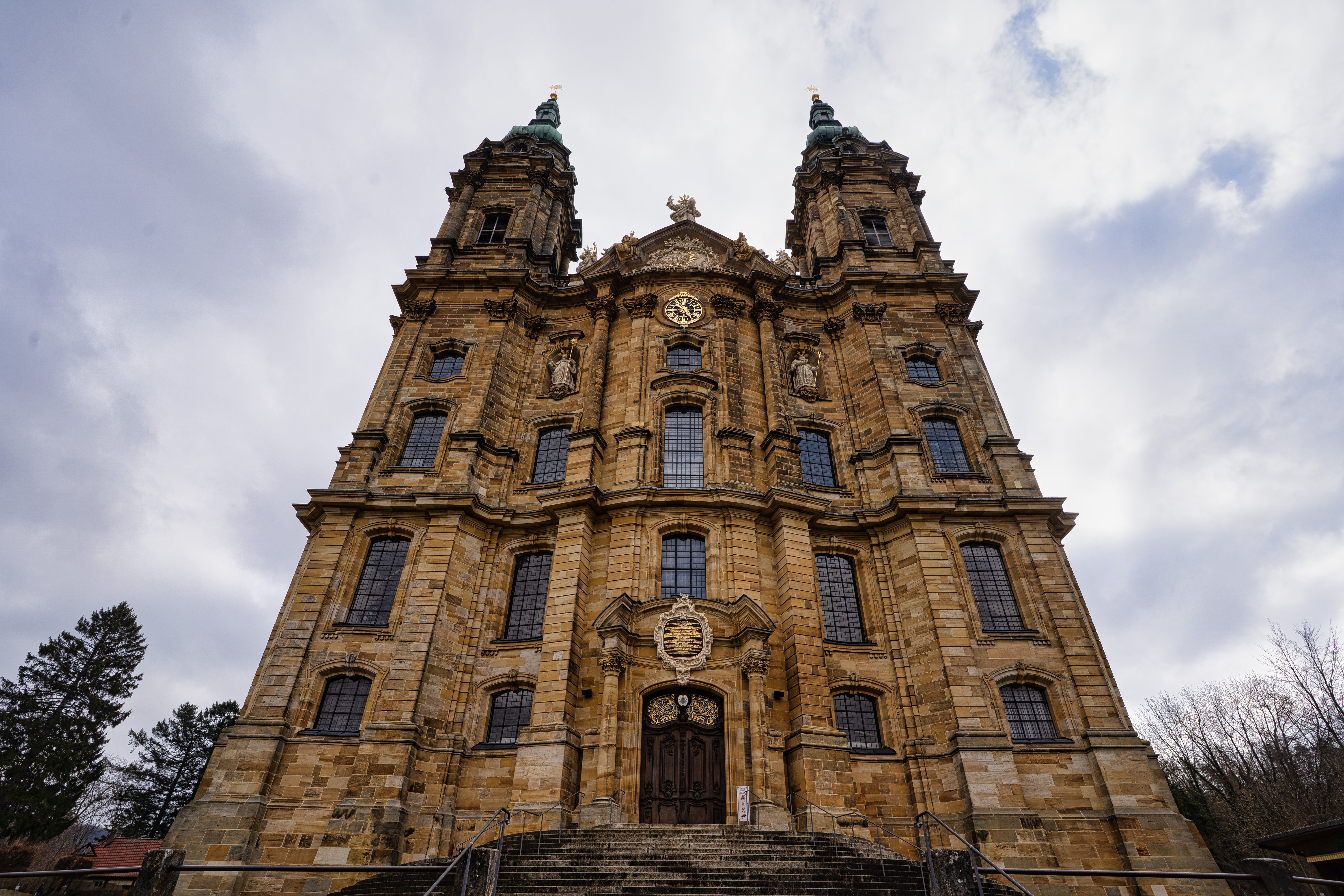
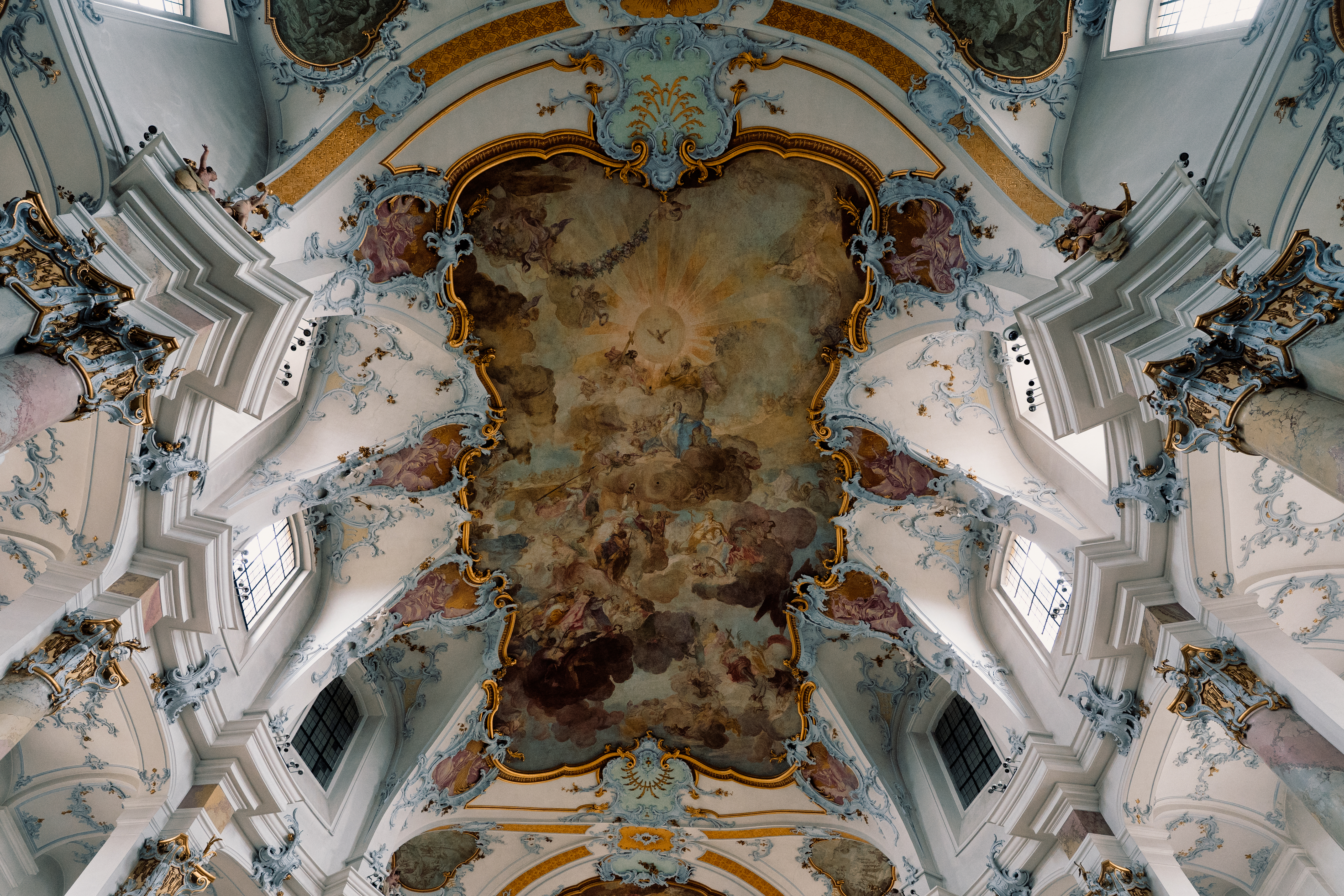
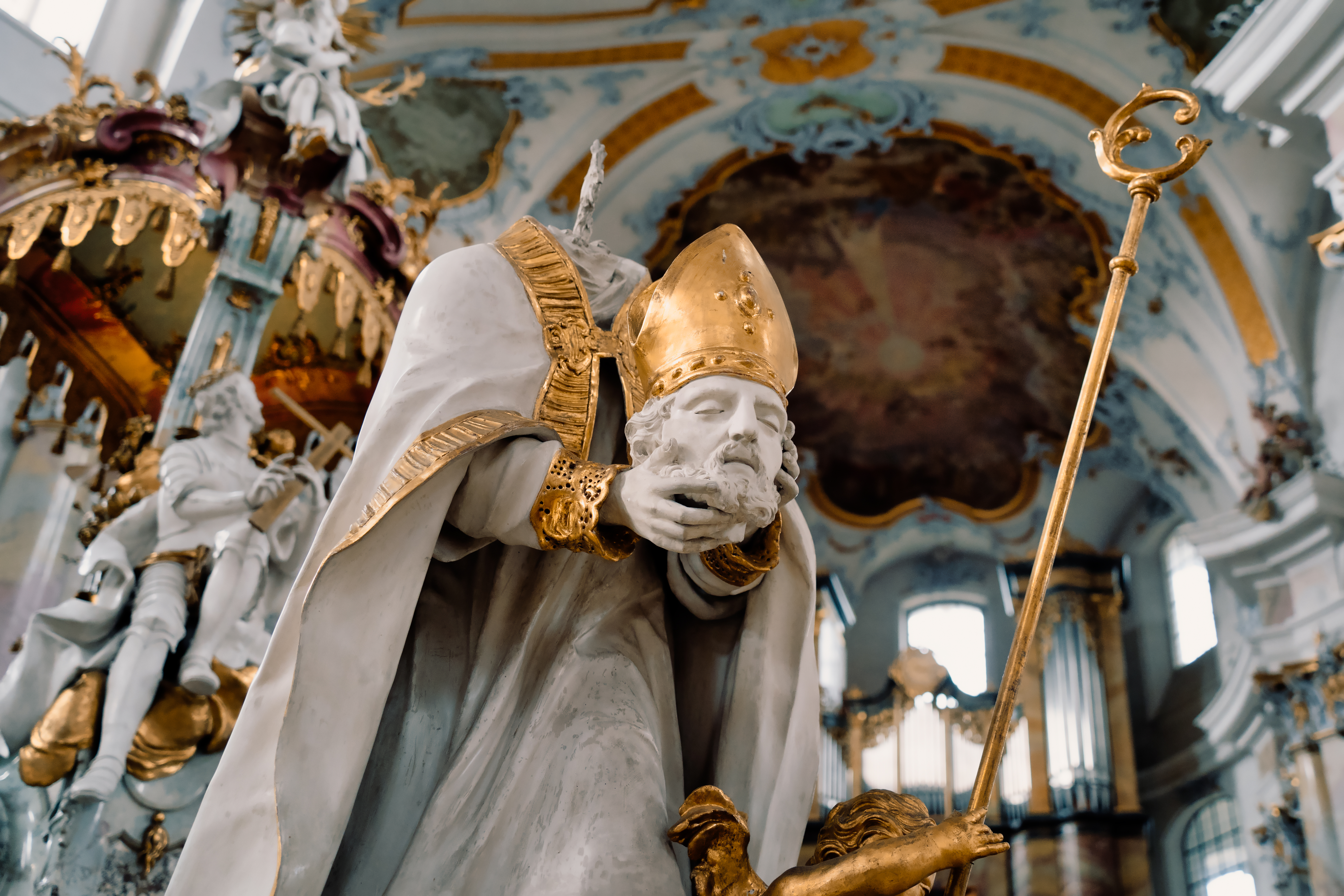
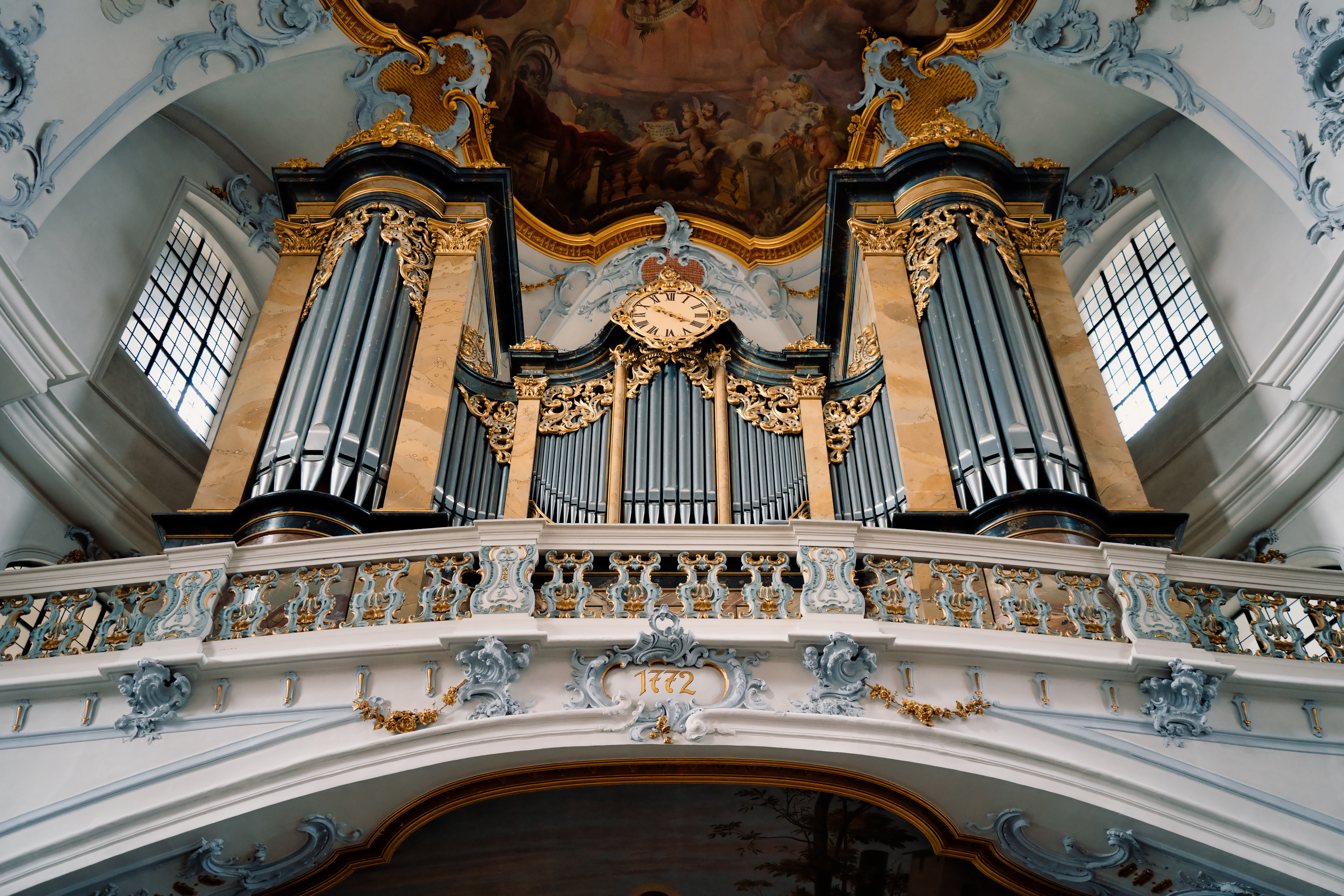
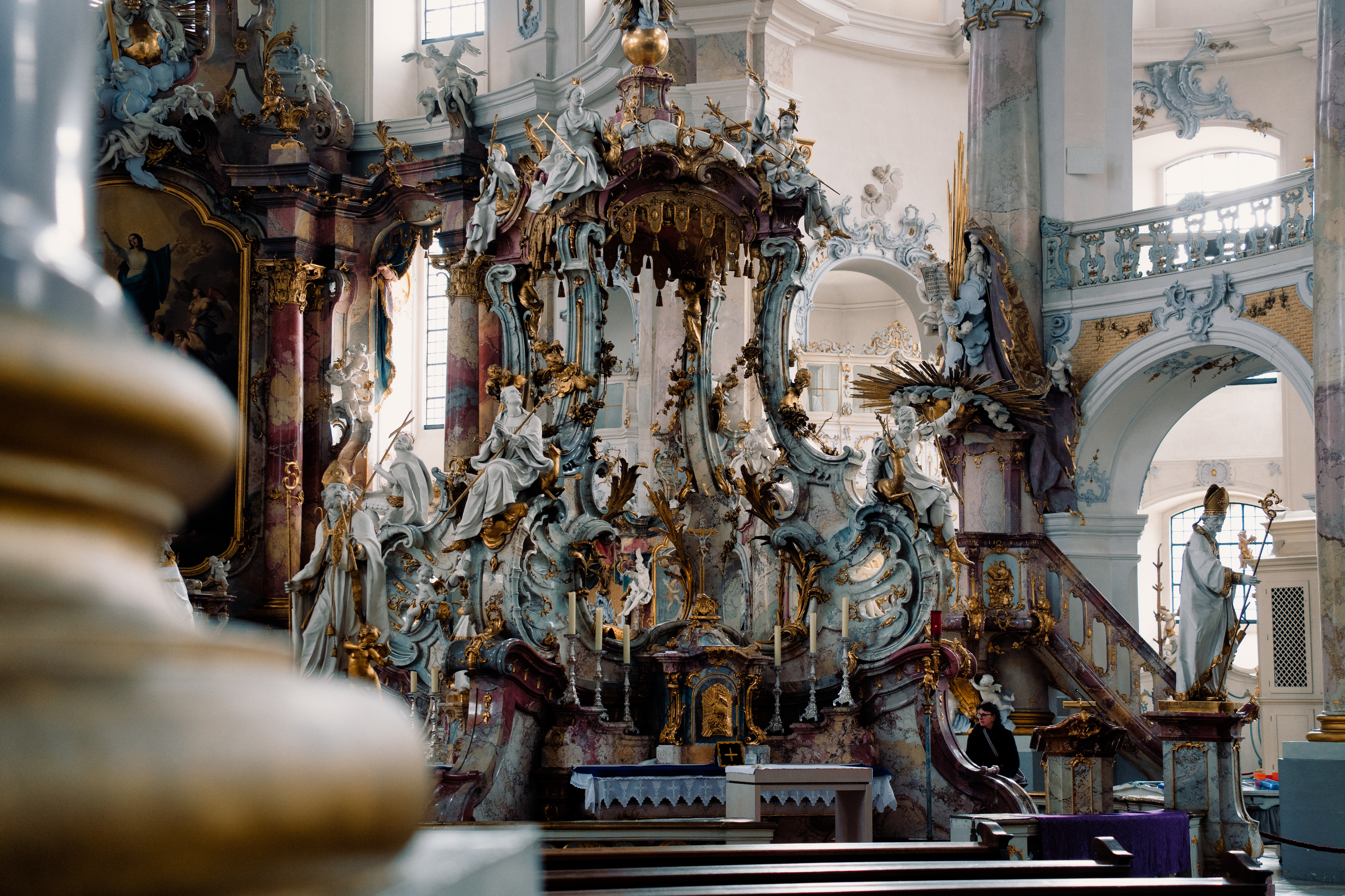
Set amidst the rolling hills of Franconia, the Basilica of Vierzehnheiligen rises like a hymn in stone — a masterwork of jubilant Baroque architecture. Designed by the famed architect Balthasar Neumann in the mid-18th century, the church was built as a pilgrimage site in honor of the Fourteen Holy Helpers, based on a reported apparition in the area in the 15th century. Its layout follows Neumann’s signature use of dynamic, centralized space, emphasizing movement and fluidity over rigid axial design. The interior features richly decorated stucco work, altars with gilded detailing, and a bright, light-filled nave that contrasts with the heavier atmosphere of many Baroque churches. The use of white and pastel tones enhances the open and uplifting spatial impression. Sculptures and ceiling frescoes contribute to the overall visual rhythm without overwhelming the architectural clarity.
Vierzehnheiligen remains one of the most important examples of German Rococo and late Baroque religious architecture. It is both an active place of worship and a popular destination for travellers. The church’s dynamic spatial layout, abundant natural light, and decorative richness convey a sense of celebration rather than solemnity. These qualities make it a prime example of what can be described as Jubilant Baroque—a style that expresses joy, movement, and spiritual openness.


 Michael Hoffman Photography