
Afternoon Project: London Pt. 2
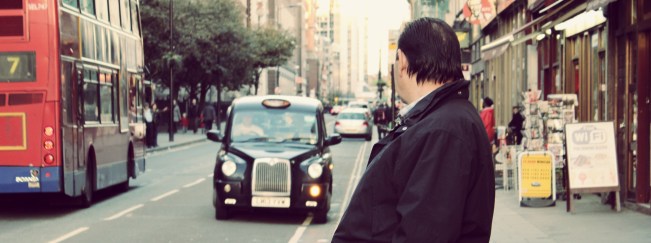
Shot during one afternoon on the 10th of November. More information about the series is in the last post.

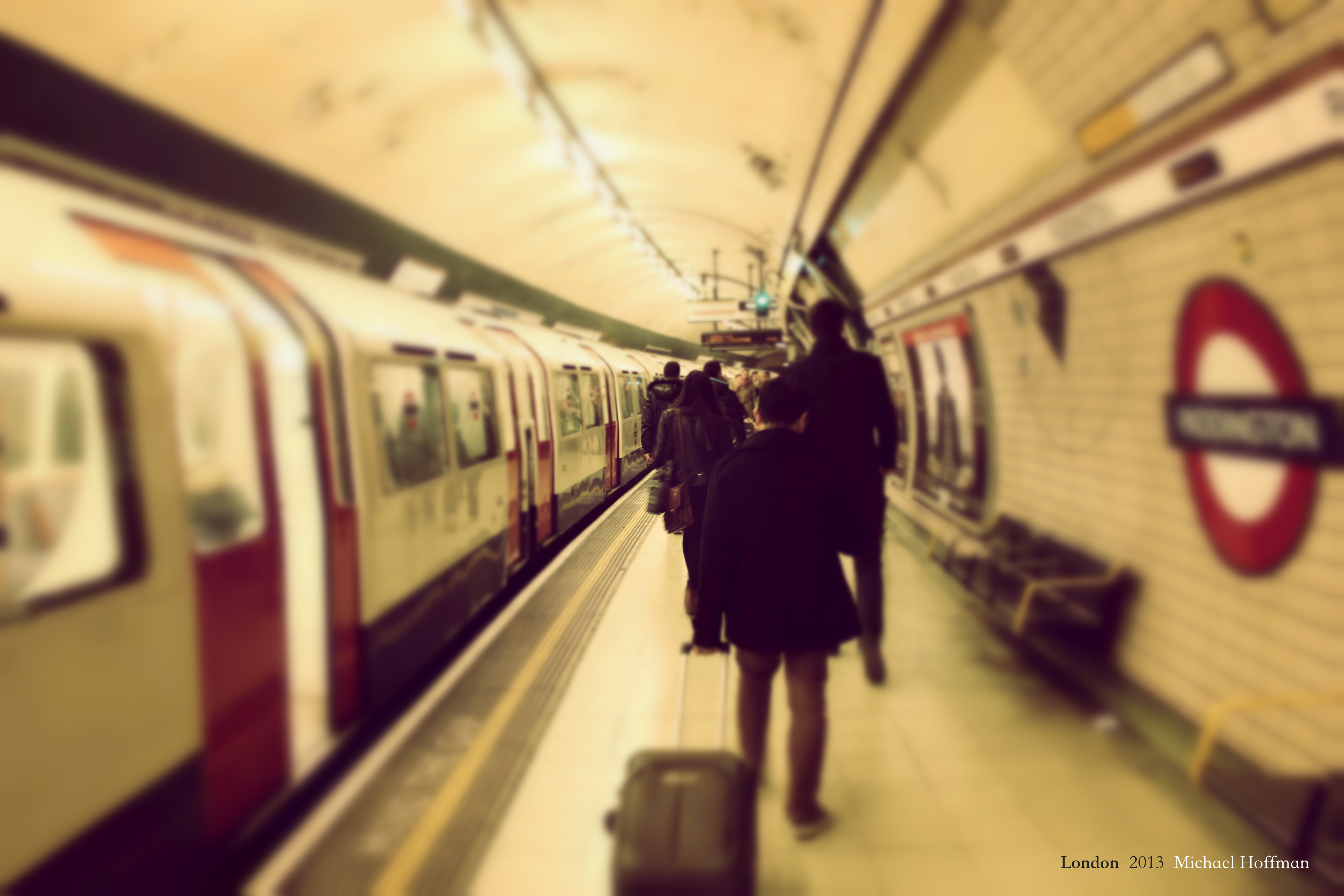
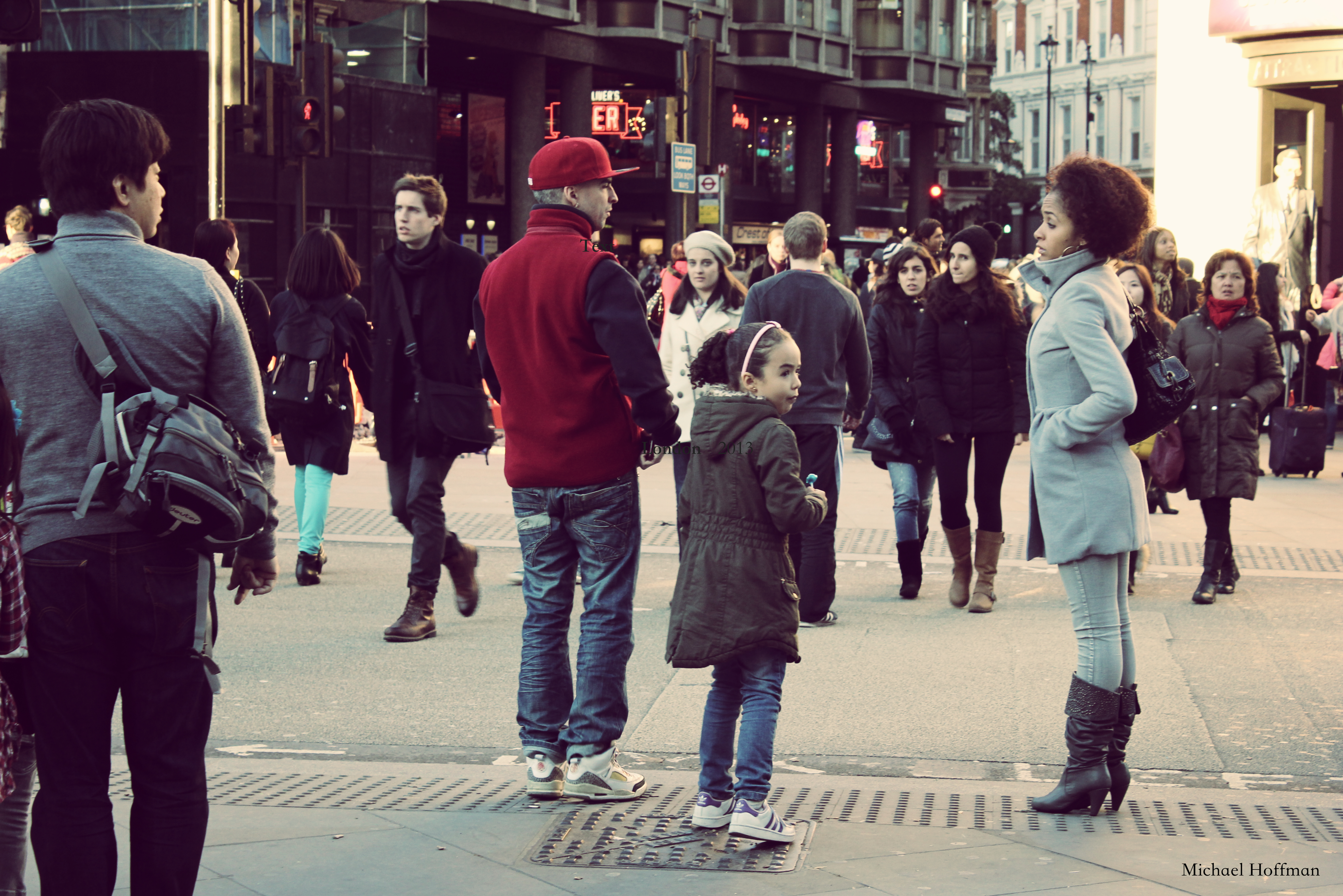
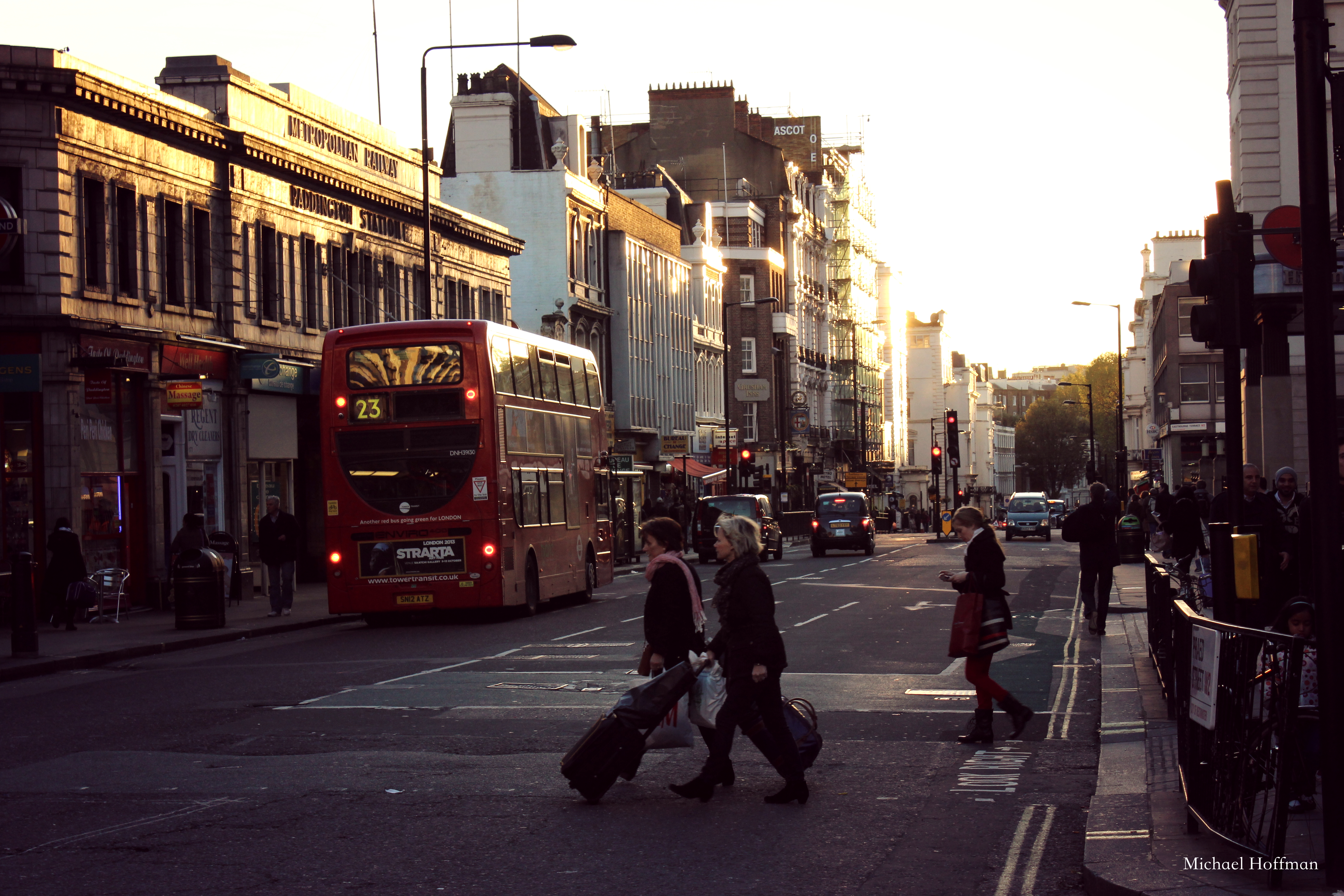
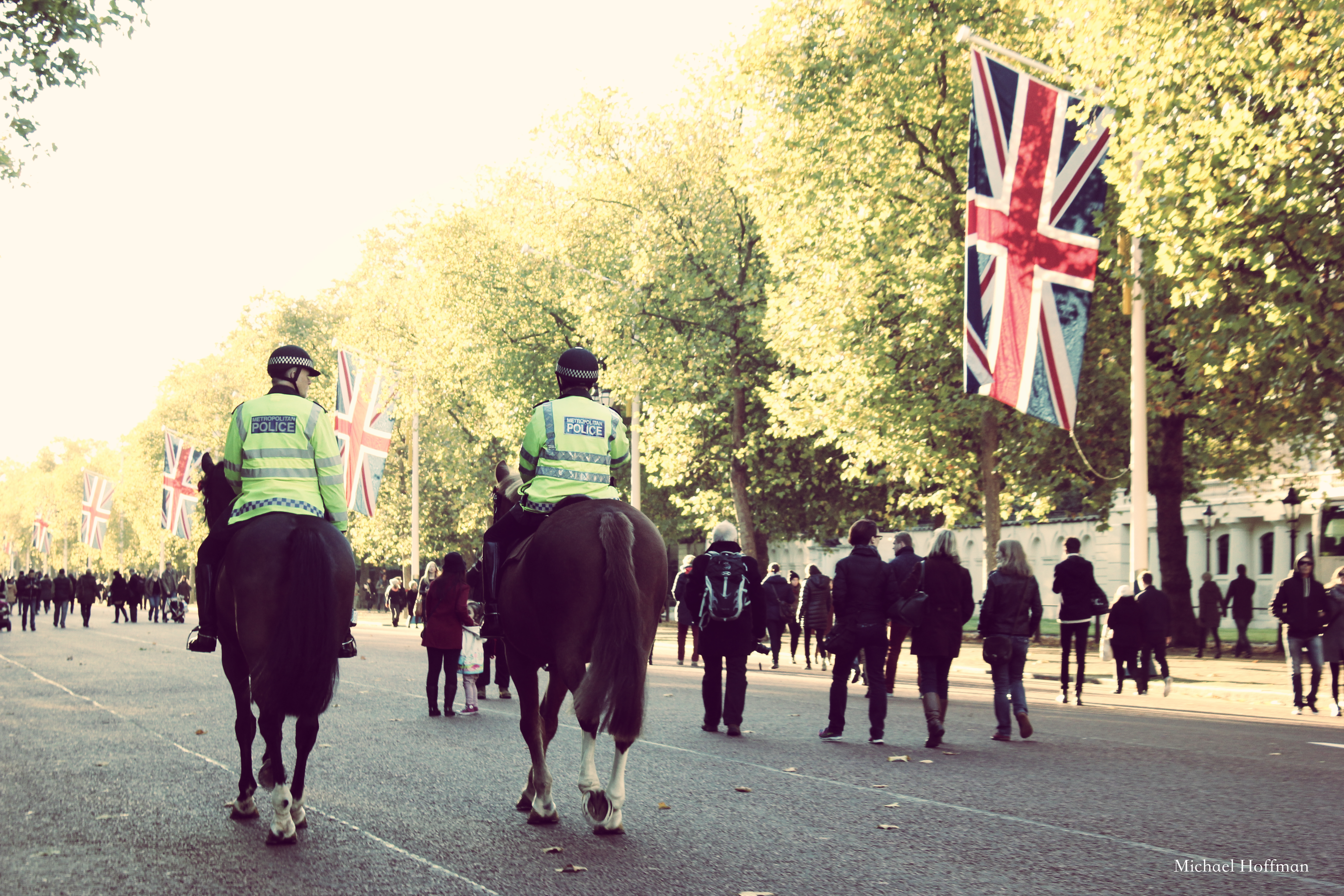
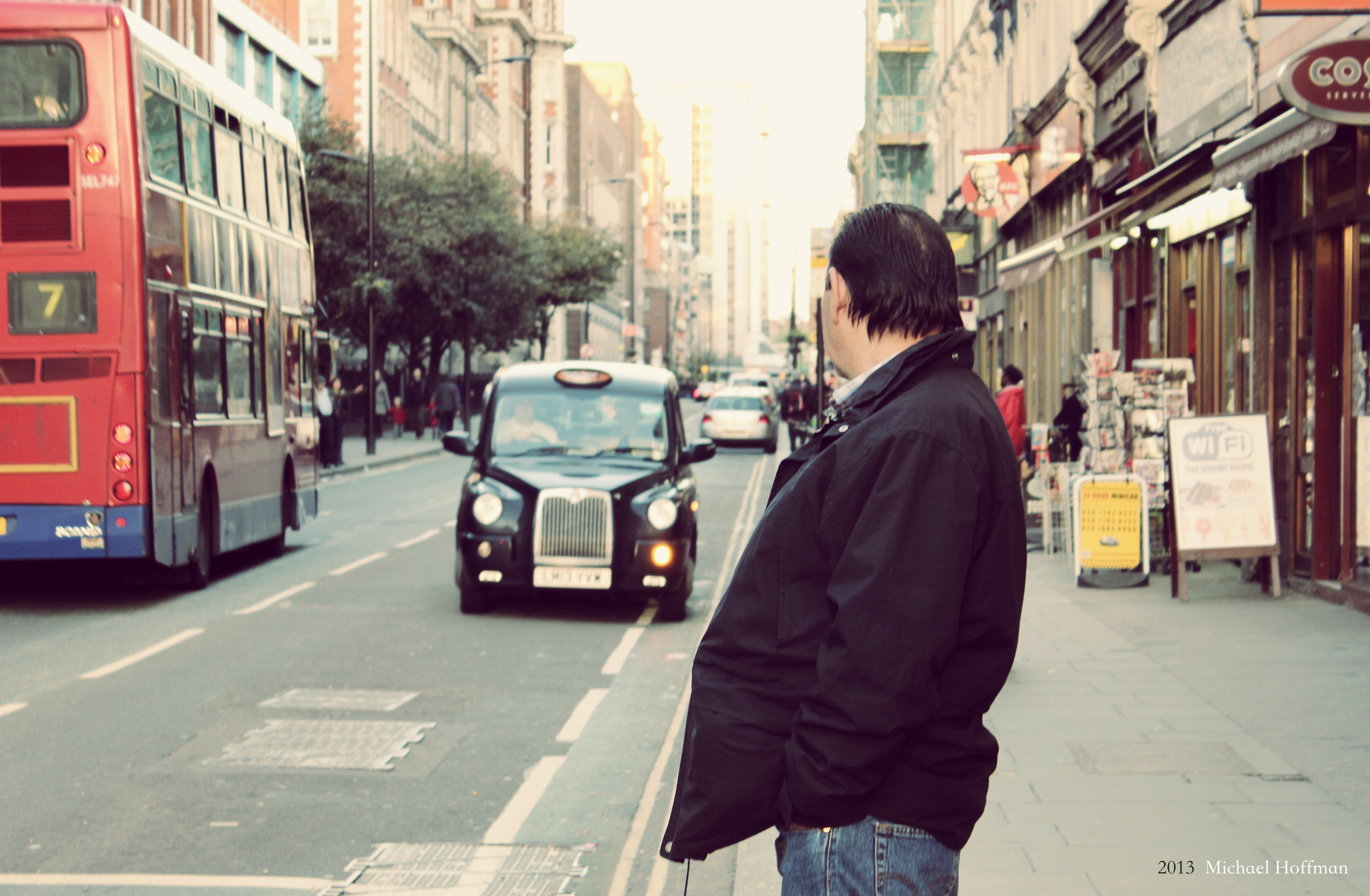
Shot during one afternoon on the 10th of November. More information about the series is in the last post.
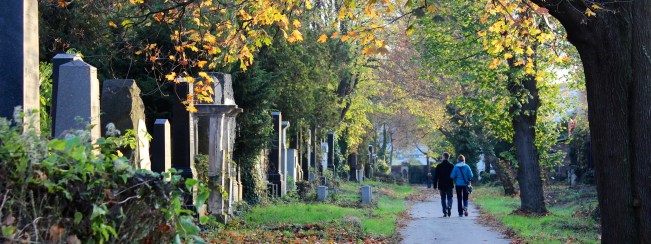
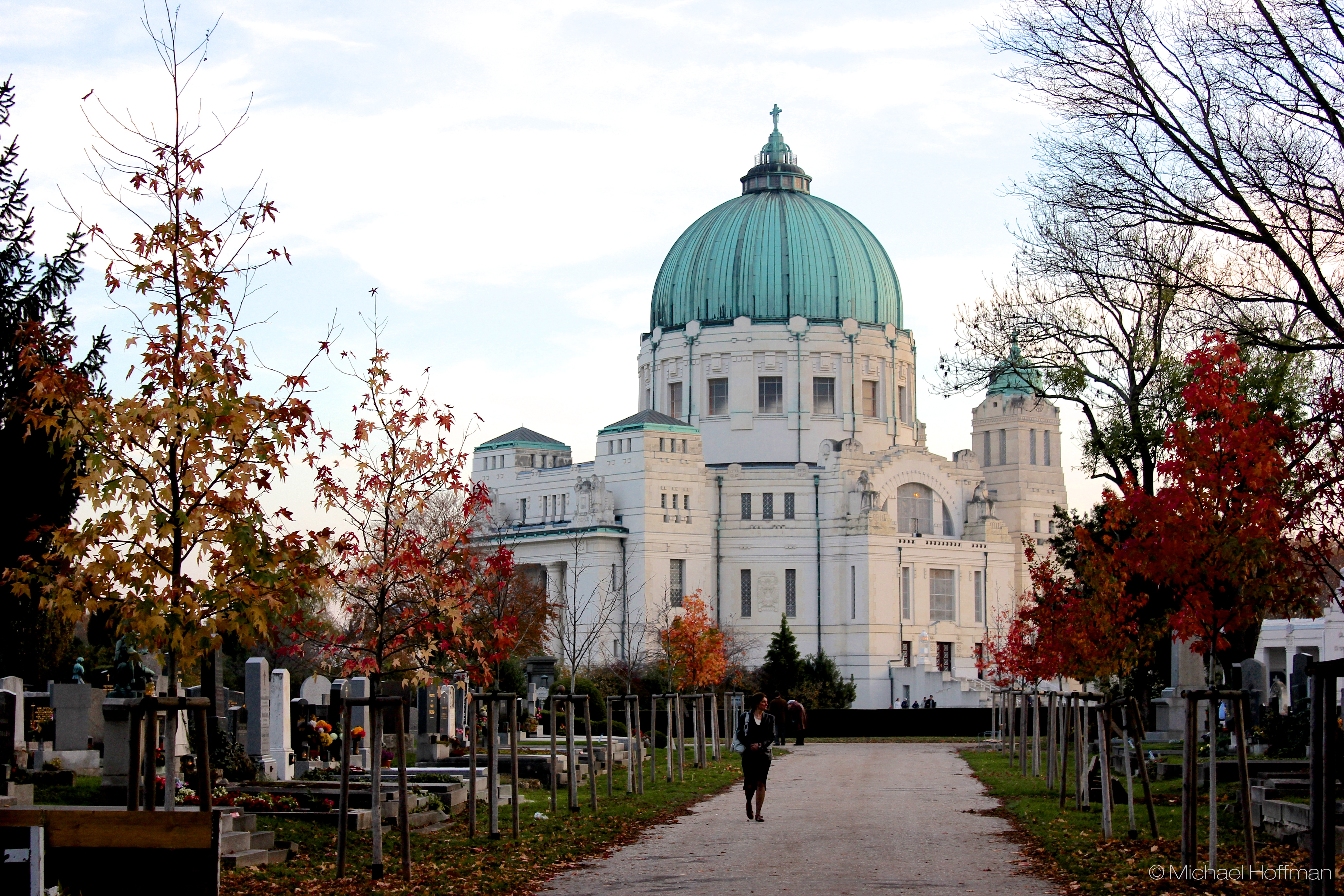
This is one kind of “The Viennese Central Cemetery Part 2,5,” or the outtake. Two shots I really liked but which didn’t fit into. In the second picture, you see the fabulous Karl-Borromäus church in the center of the cemetery. Plus, another shot from Vienna’s streets captures autumn’s colors.

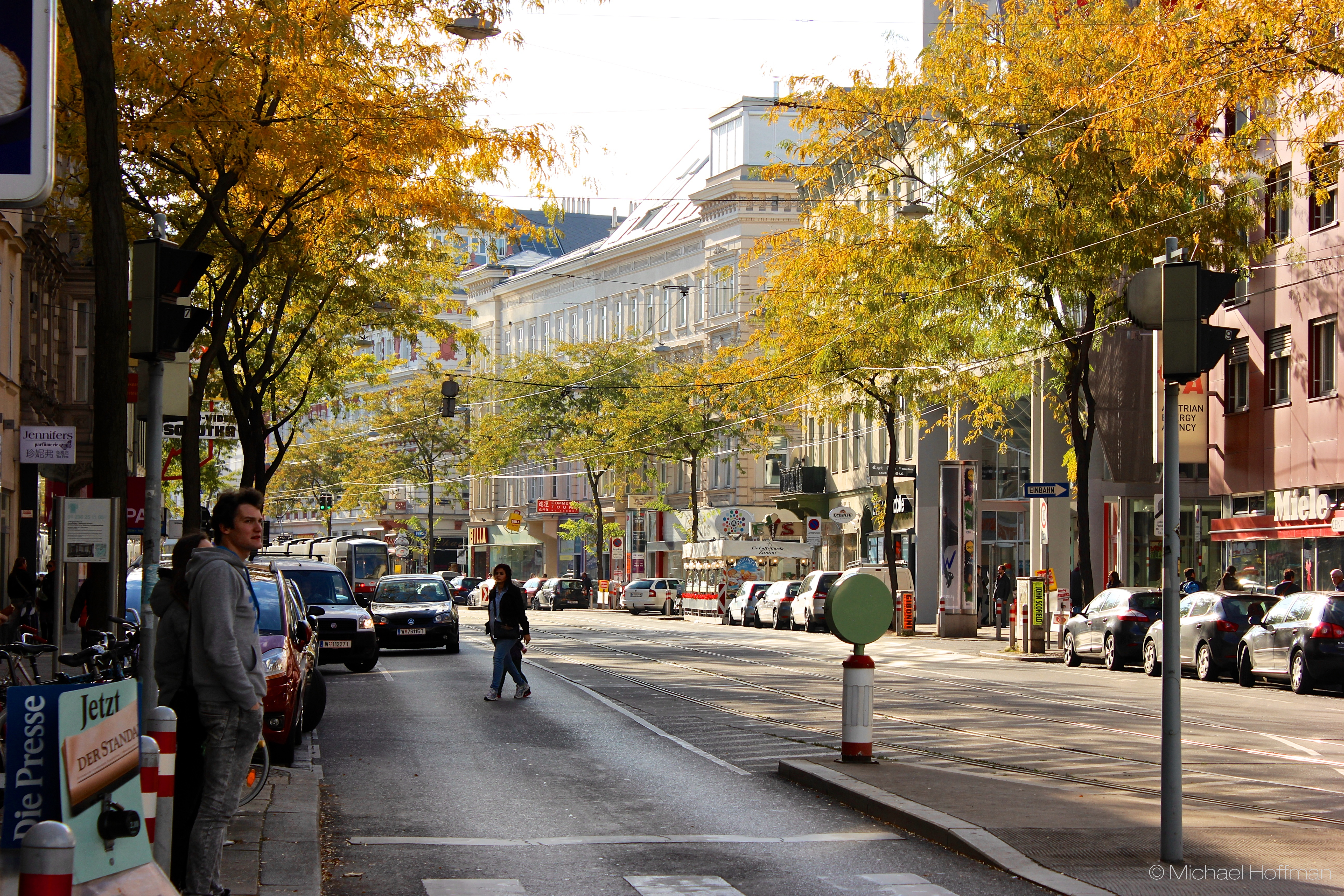

The great thing about living in Vienna is nothing is really far away, and you are abroad quickly. Central Eastern Europe and Southern Eastern Europe (the Balkans, in other words) are incredibly close. Though strangely, Austrians seldom go East (except for plastic surgeries and dentists), there is still a mental barrier I never fully understood. In the Austrian mindset, the Czech Republic is still in the East, and Krakow, Poland, seems indefinitely far away, though, in reality, it is much closer to Vienna than the Westernmost city in Austria, Bregenz. Naturally, this snooty attitude is viewed with suspicion by our neighbors. However, much is changing, and the younger generation is beginning to embrace the charm of the East.
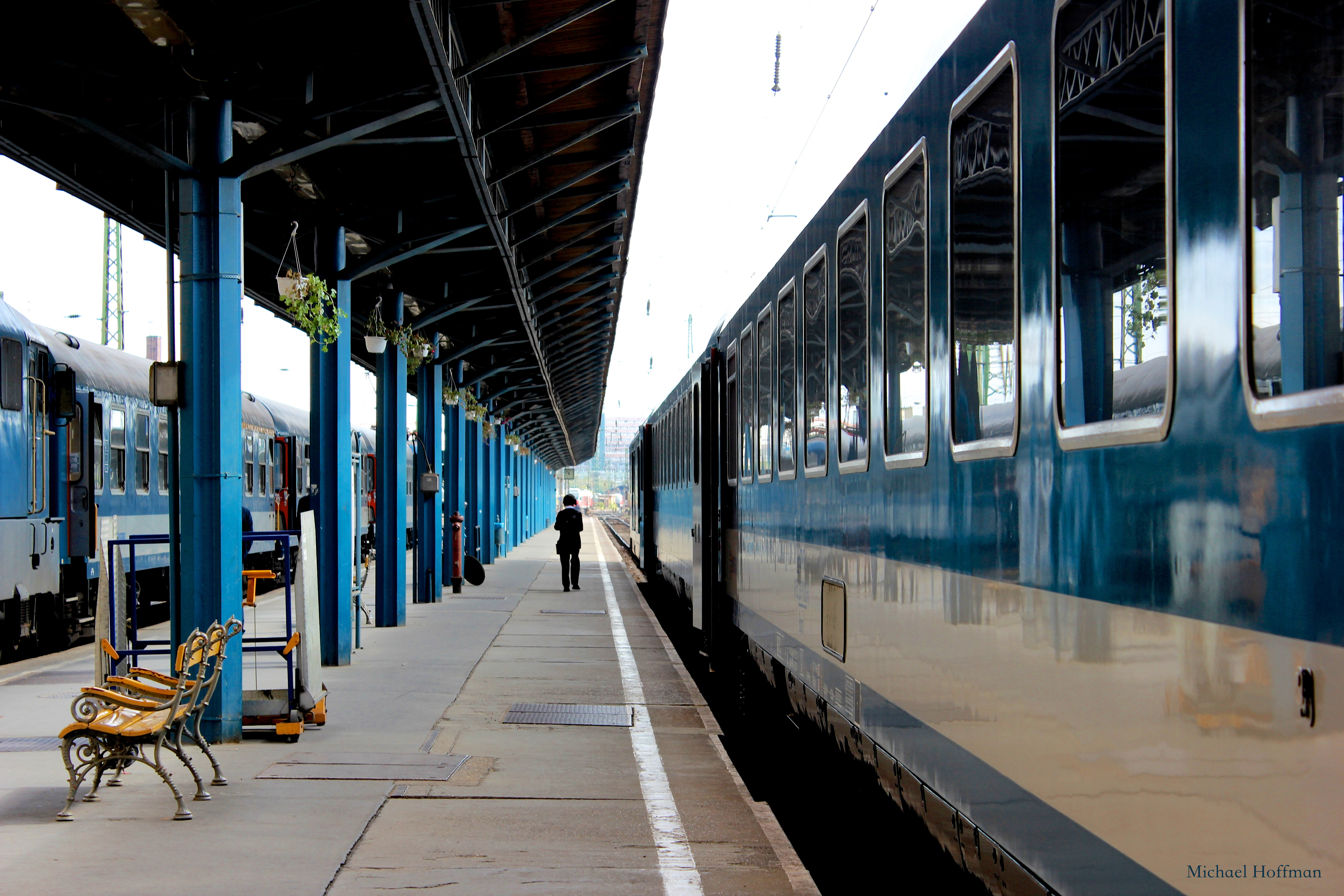
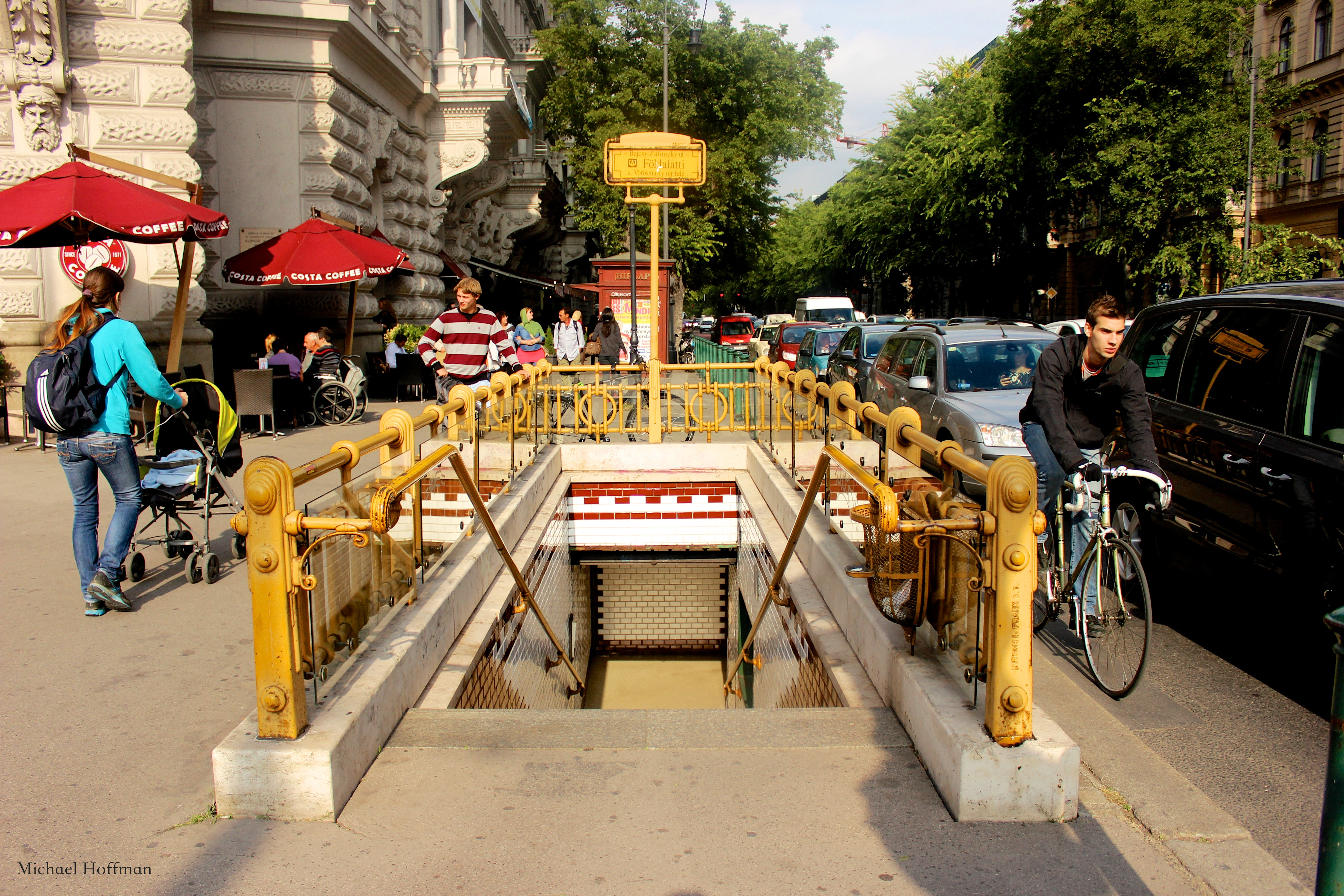
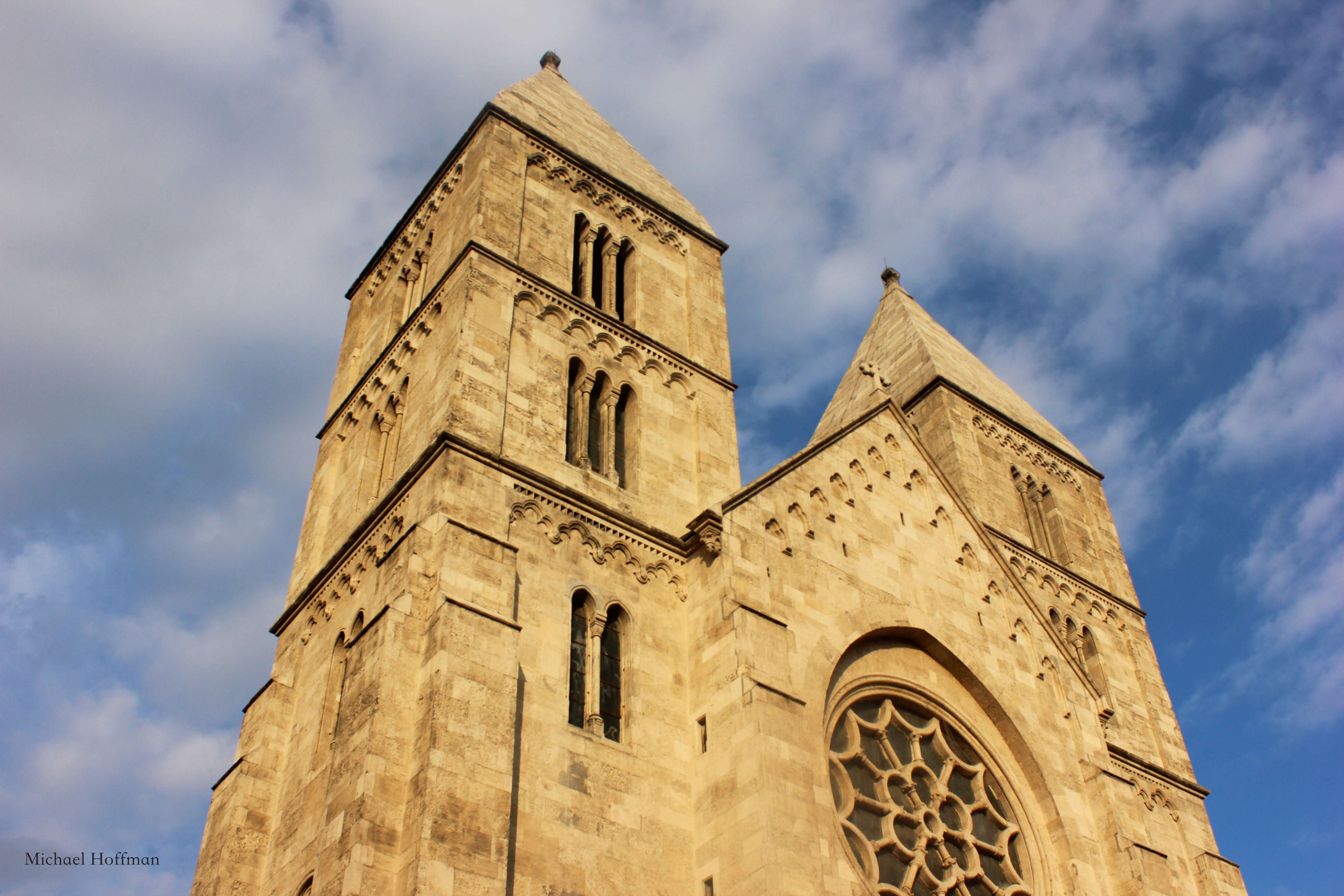
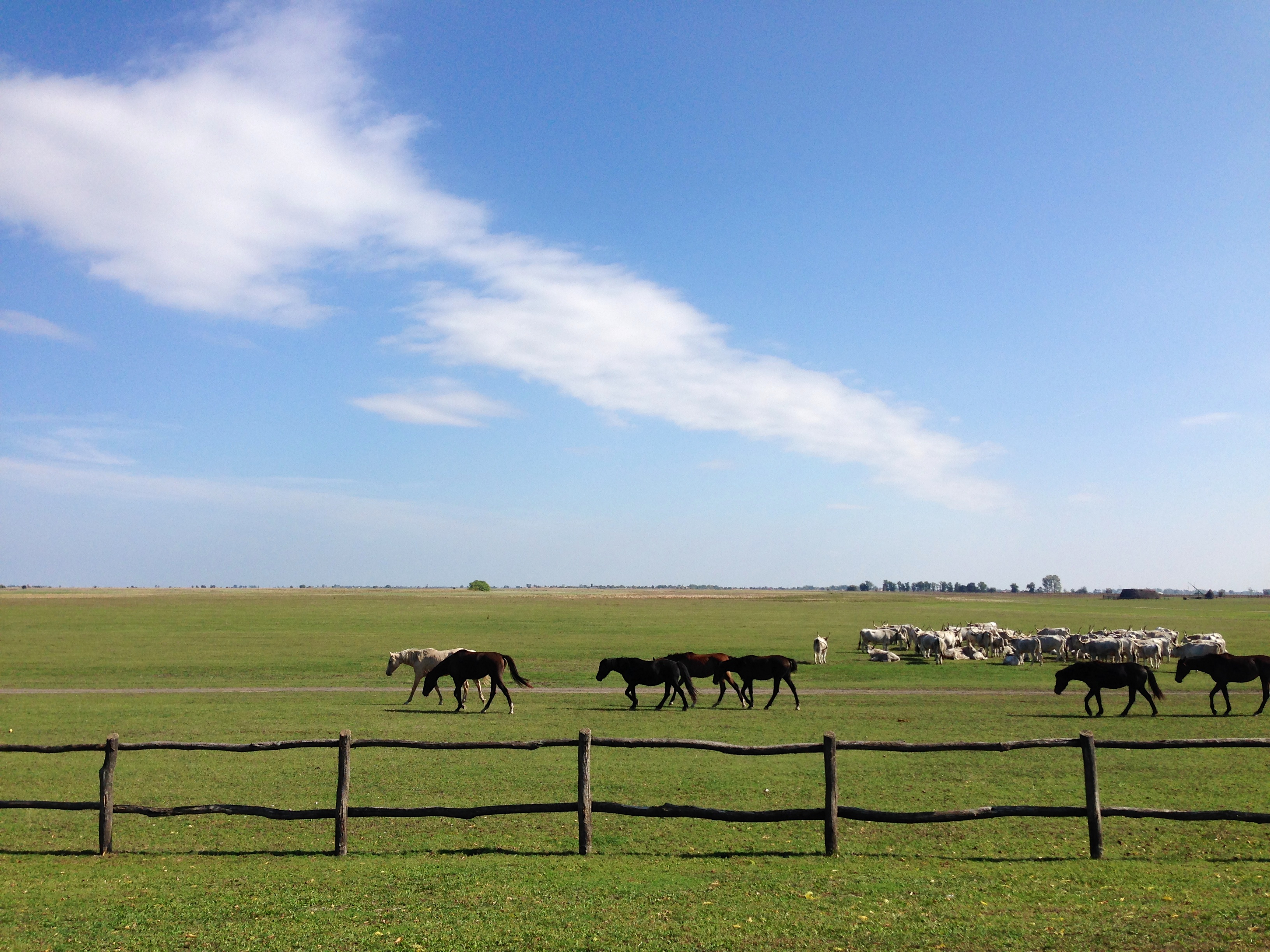
Incredibly close to Vienna, both in geographic and cultural terms, is the capital of Hungary, Budapest. Like Vienna, it had its heydays around 1900 in the Austro-Hungarian Monarchy, and you still see it. In architectural terms, the two cities are closely related; there are a lot of baroque churches, large areas of residential buildings from the founding period, and some beautiful Jugendstil façades. If you look on the map and see the districts (in both cases, 23.) and names of bridges and boroughs, you feel like you have landed in a mirror universe. However, there are some differences. Budapest still has maintained its old railway stations (pictures 1, 3, 5 in the background and 7), which disappeared from Vienna and were replaced by shopping-service hybrids in the vain of the consumerist society. Also, the city is much closer to the Danube than Vienna, having a pleasant city hill on the Buda site, making it very similar to Prague in structure. Hungarians are very patriotic; you see a lot of monuments everywhere. A vital role in their self-view is the role of a nomad’s heritage and horse riding culture. This heritage links closely to the country’s geographic conditions as a vast lowland (pictures 2 and 5). Hungary is definitely worth a visit, especially for young travelers, being also very affordable at the moment.


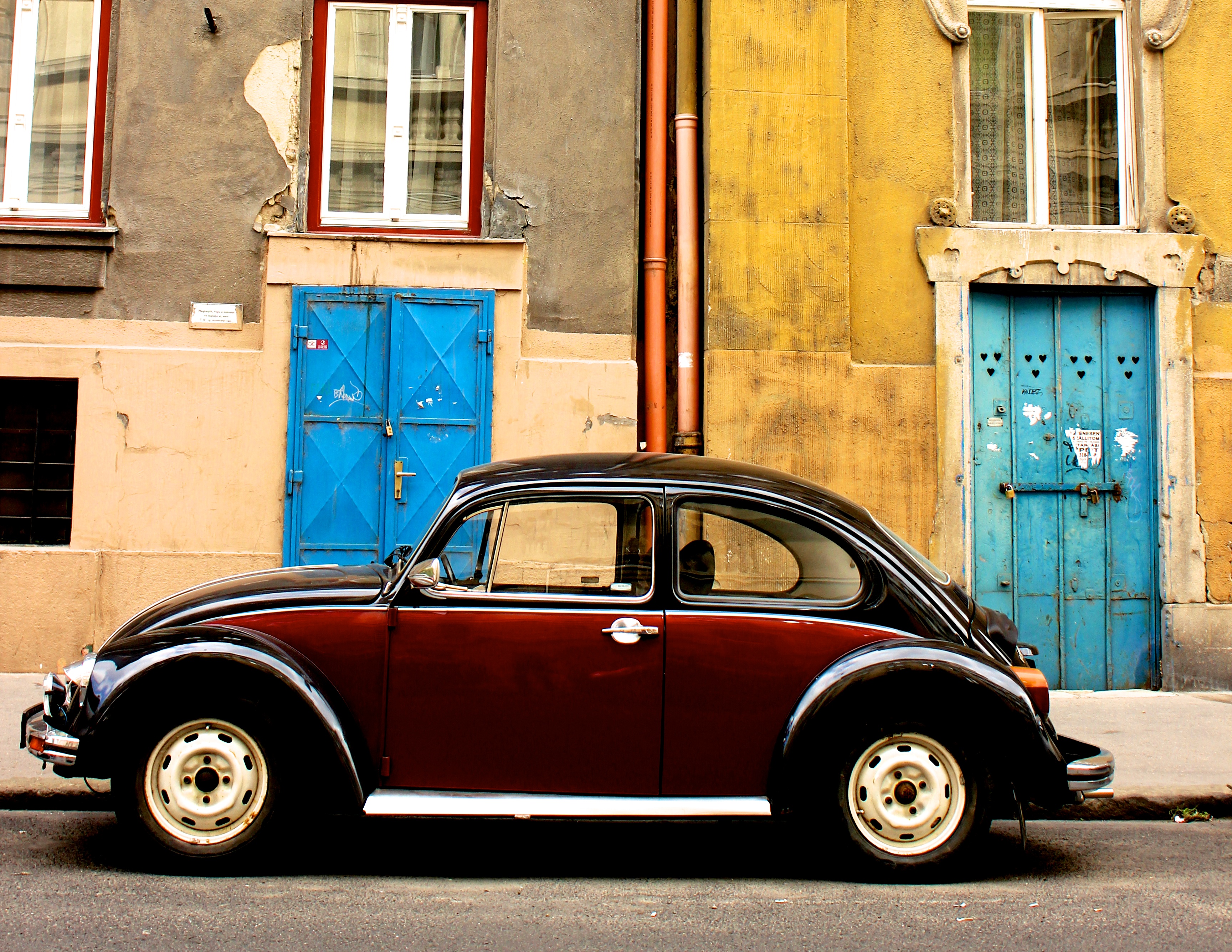

Tallinn is known for its medieval old town, a UNESCO world culture heritage site worth visiting. In this gallery, though, I would like to give you a glimpse of the modern Tallinn inspired by Scandinavia’s clear and sober architecture. I will begin with shots taken in the Rottermann District, a new part of Tallinn east of the Old Town close to the port.
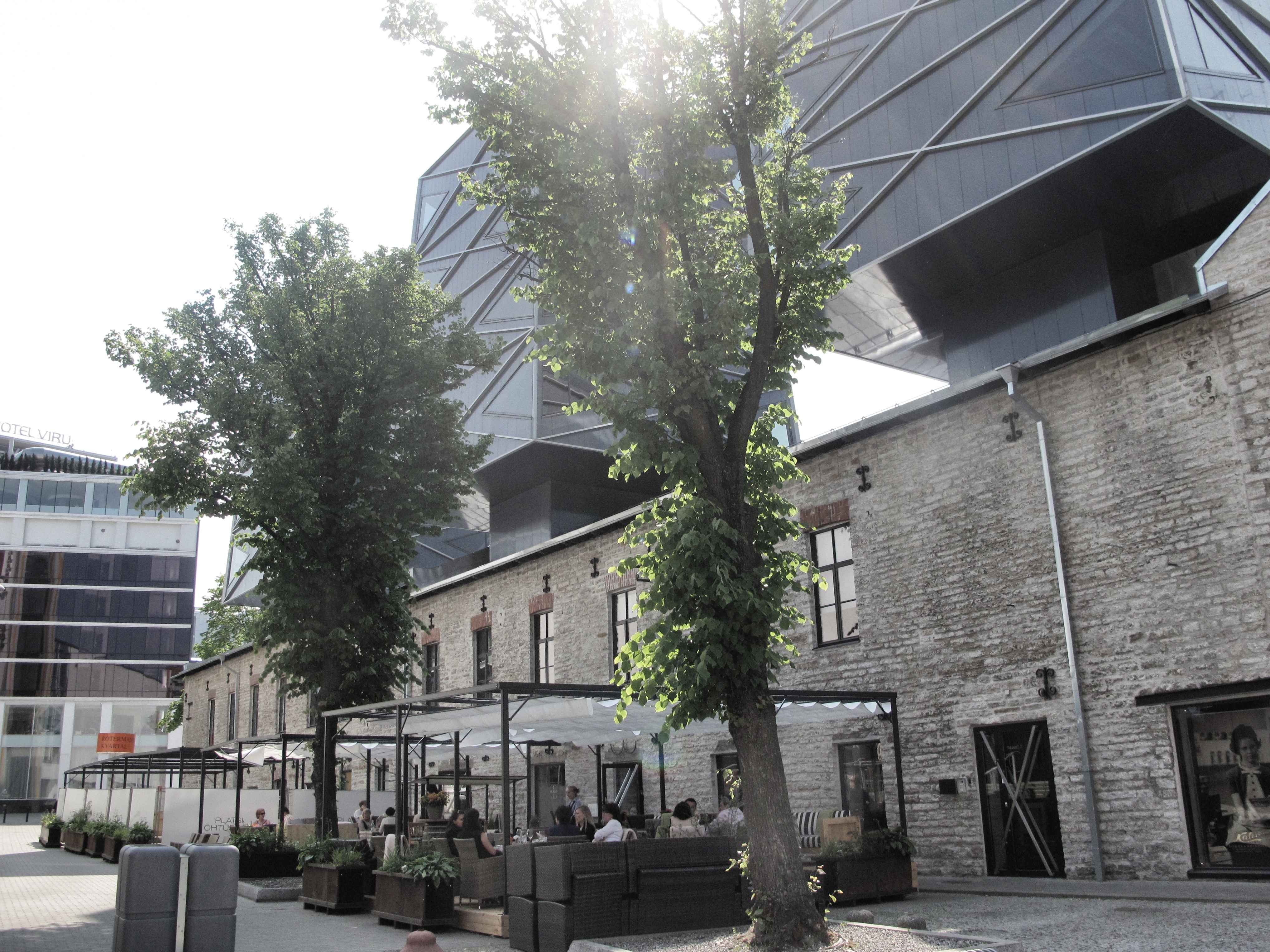
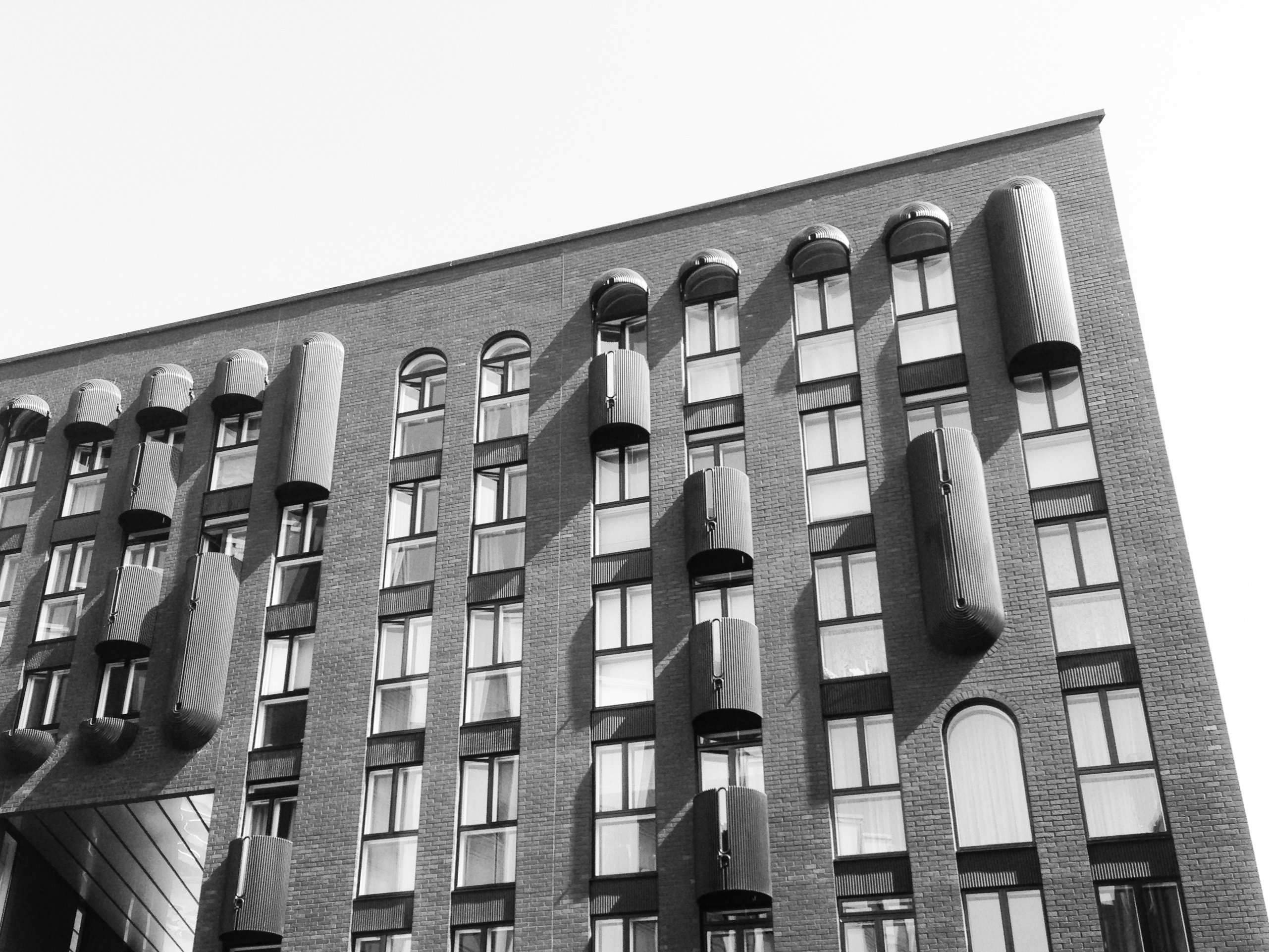
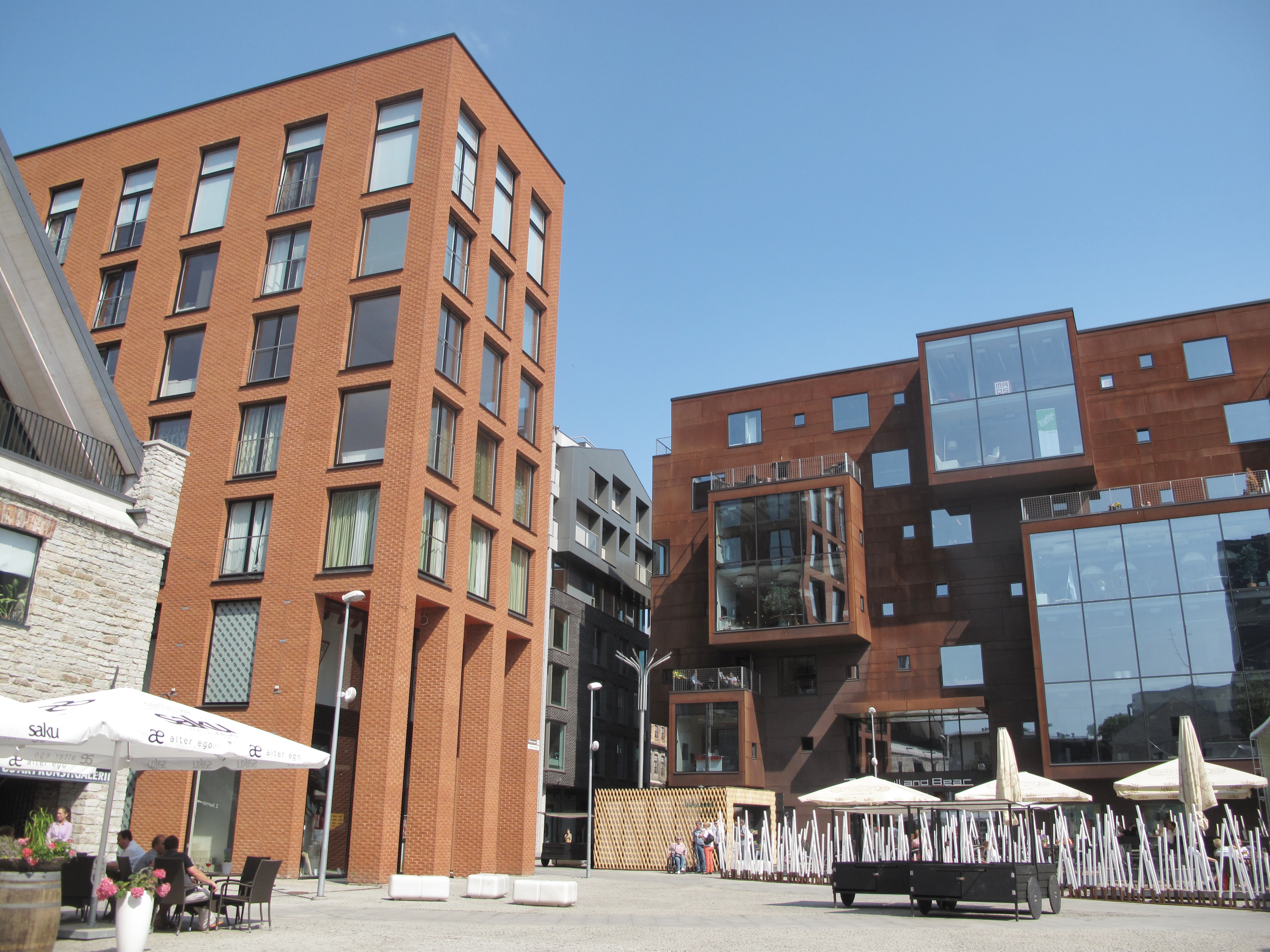
These two shots, showcasing a miniature city model, were taken in the Architecture Museum of Tallinn.
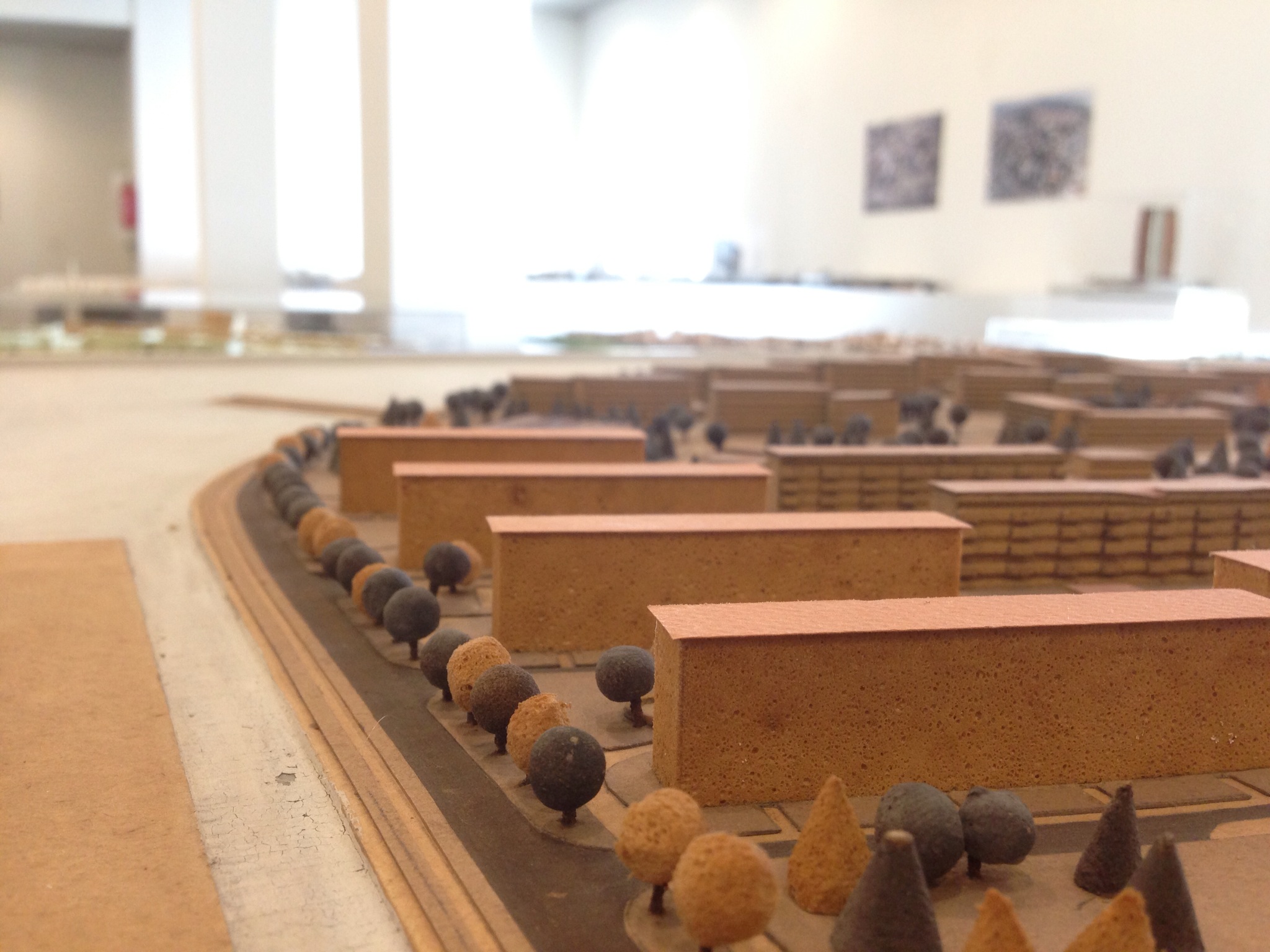

Hey! I hope you all have a great week so far! Actually, I wanted to bring the Portugal series to a worthy end with this post, but as there are some excellent shots left, there will be one more 🙂 As always, I hope you enjoy it!
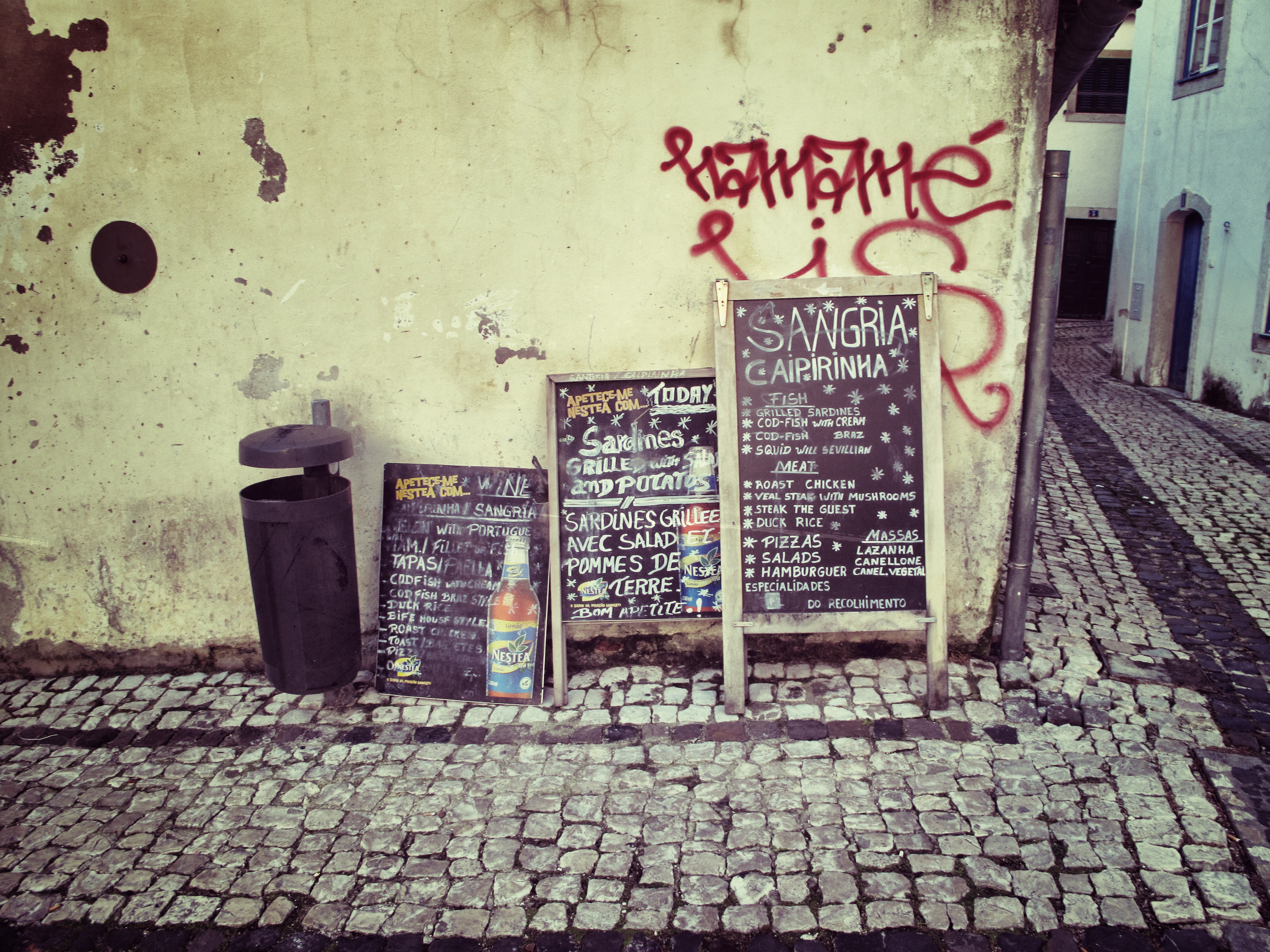
Lisboa, Alfama. We didn’t try either Sangria or Caipirinha. Wine is relatively cheap, even ordered in a restaurant (but not as cheap as in Sicily). I like Sangria, though; I must revisit Portugal to try the Portuguese one.
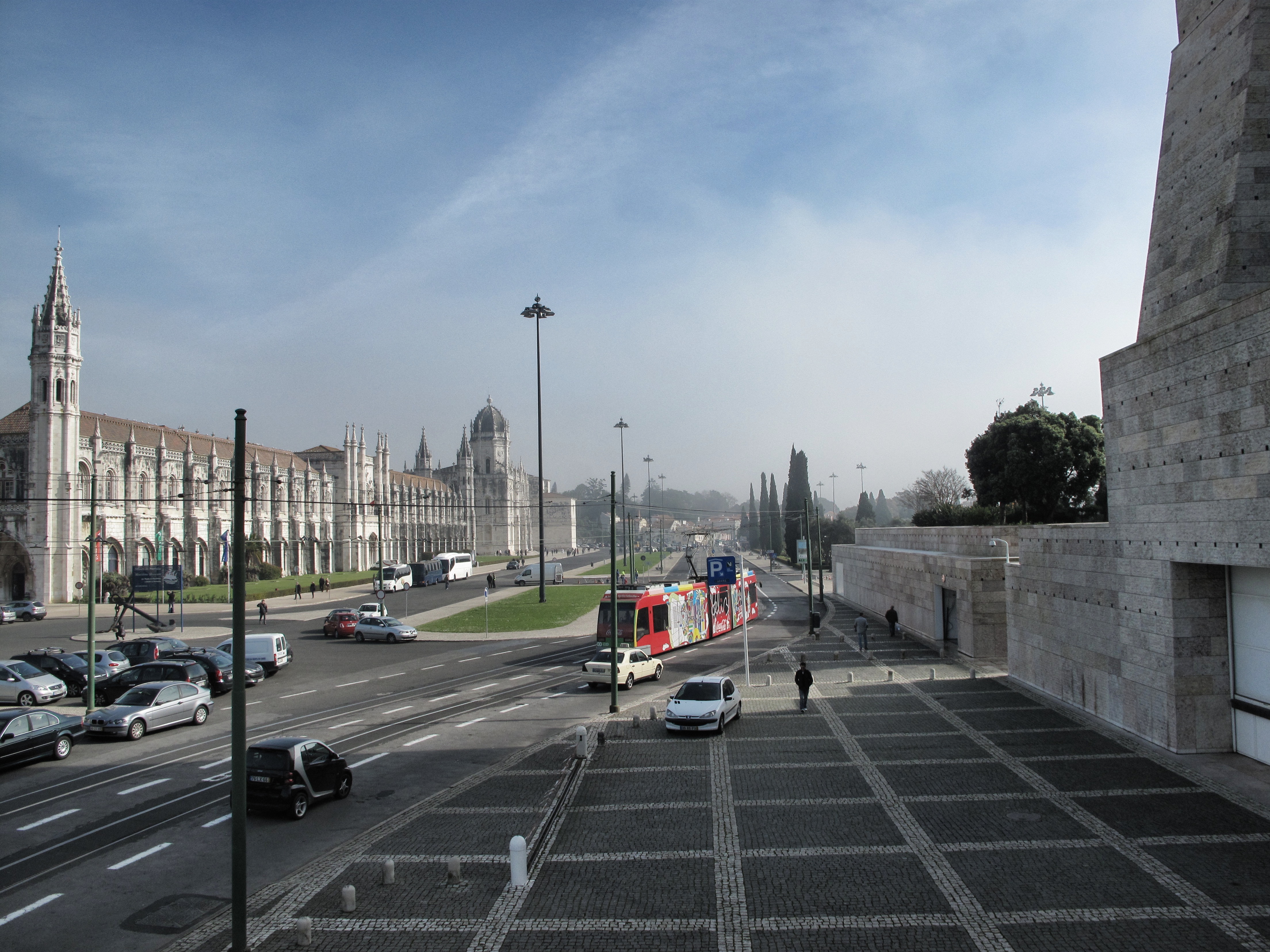
Another shot of the great Mosteiro do Jéronimos in Bélem. The entry was a couple of Euros and was very much worth it. It was great. Our (first) hostel was practically around the corner. The tramway line leads straight into the city center, our daily commuter. It’s not always as modern as this one, sometimes cranky and out of wood, but even more charming!
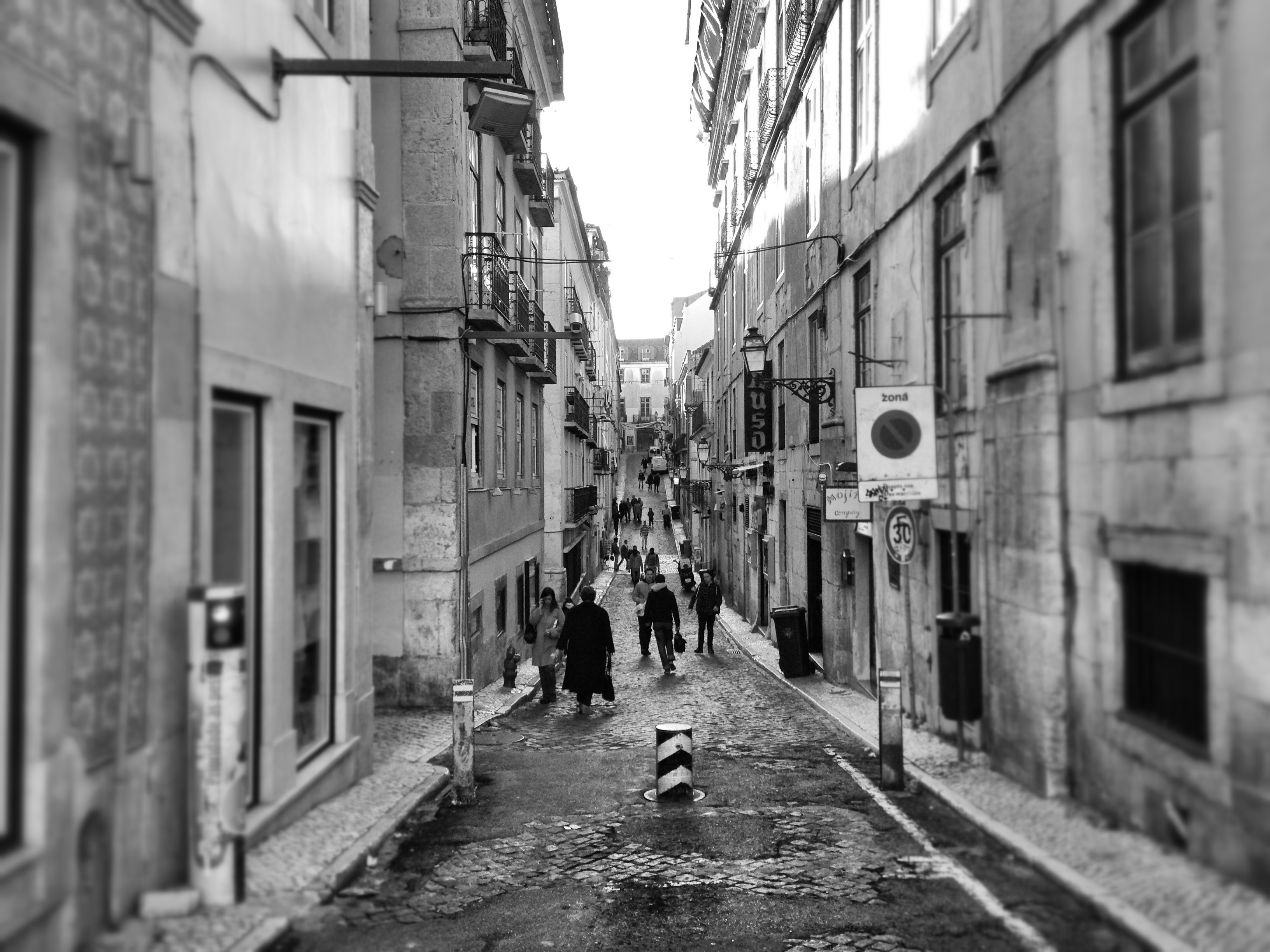
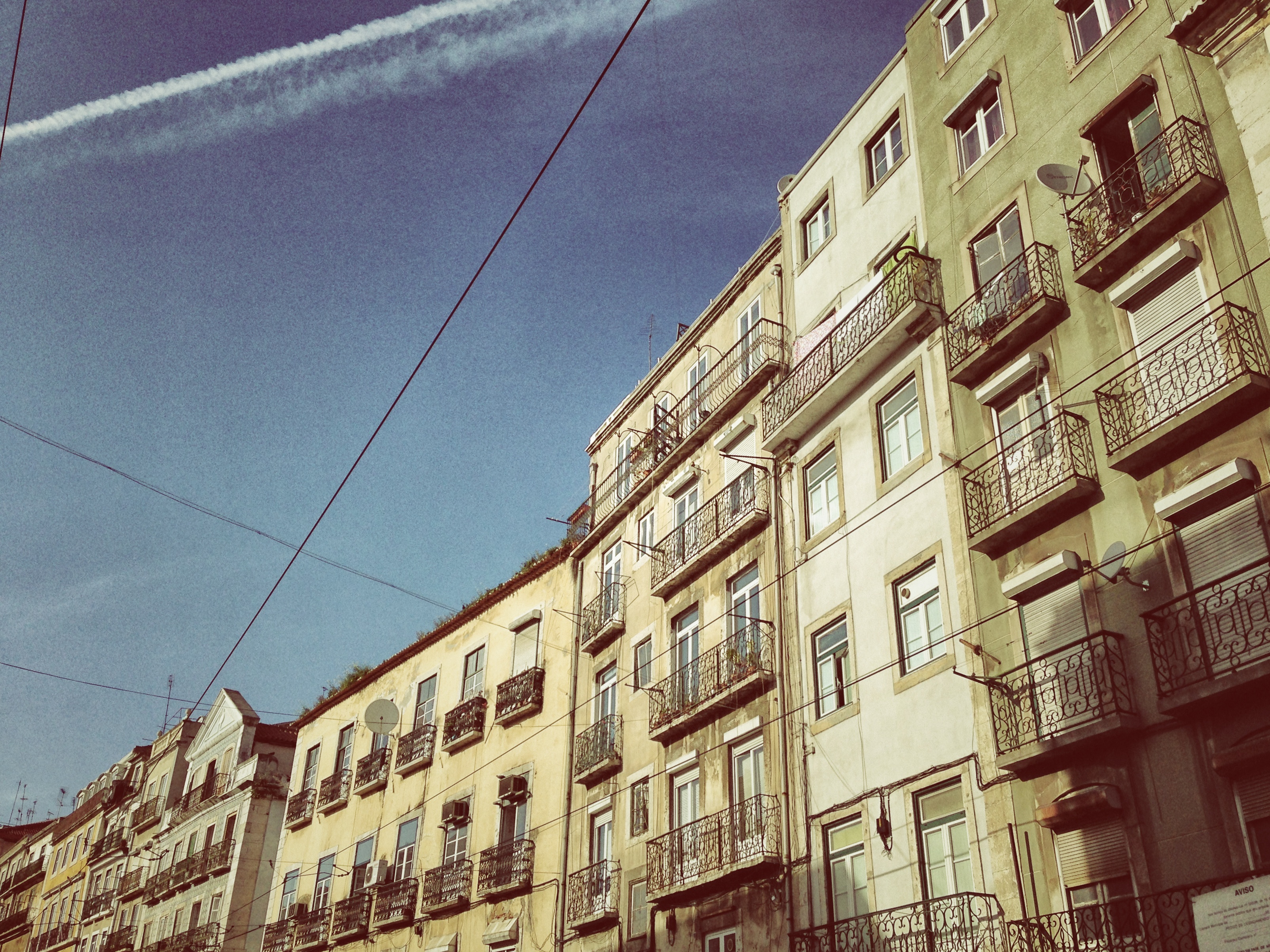
A busy street in Lisboa. As I wrote in previous posts, Lisboa is interesting because it is very much European in every sense of the word but also kind of out of time and laid down a bit like a living anachronism. You don’t have a McDonalds and H&M on every corner (I didn’t say there are none of them ;)). There are many small shops and handcraft, even shoe cleaners. At the same time, it is not as stressful as Italy (♥) or other southern countries sometimes tend to be.
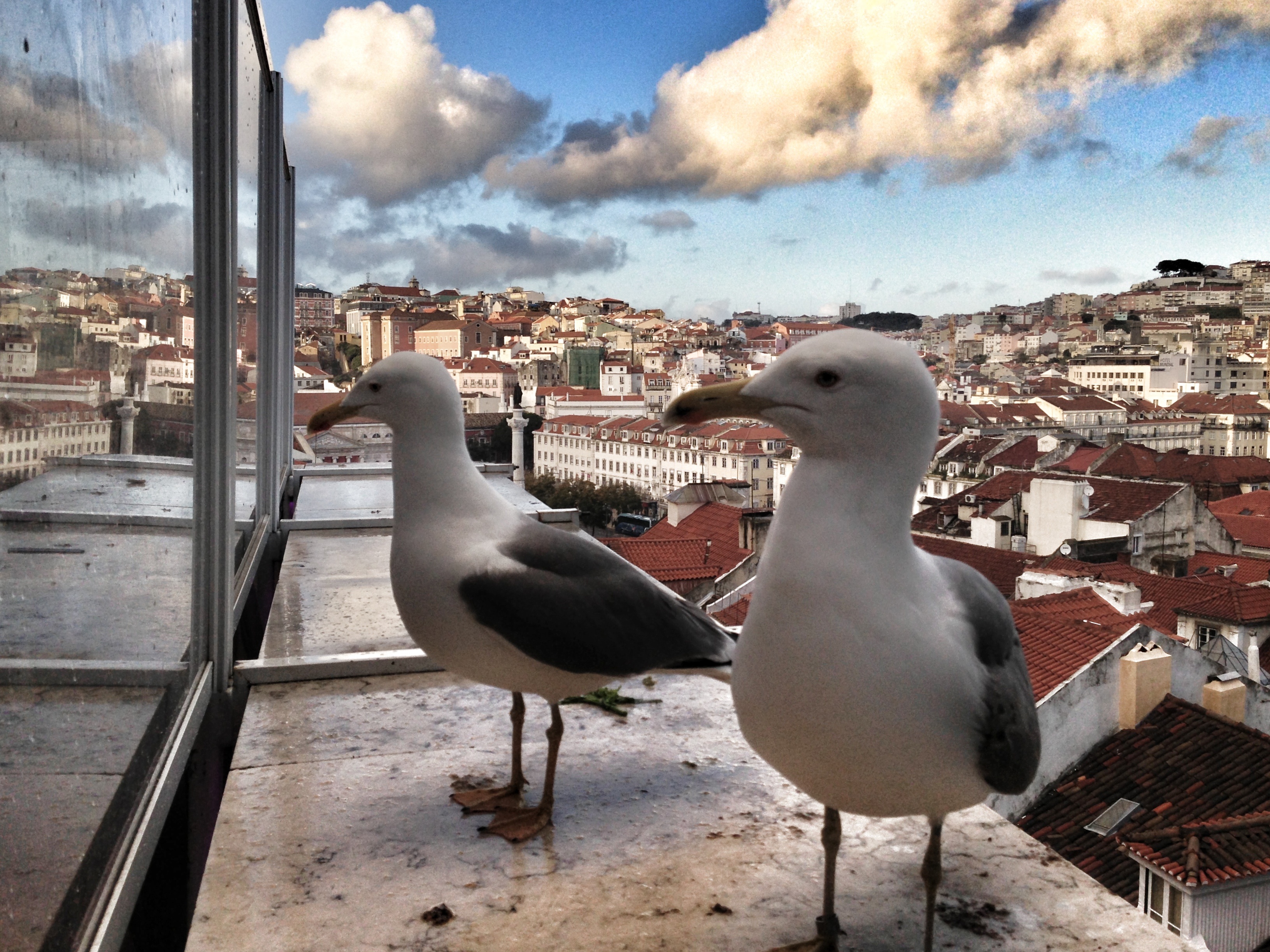
Self-examining seagulls. You are pretty – don’t worry.
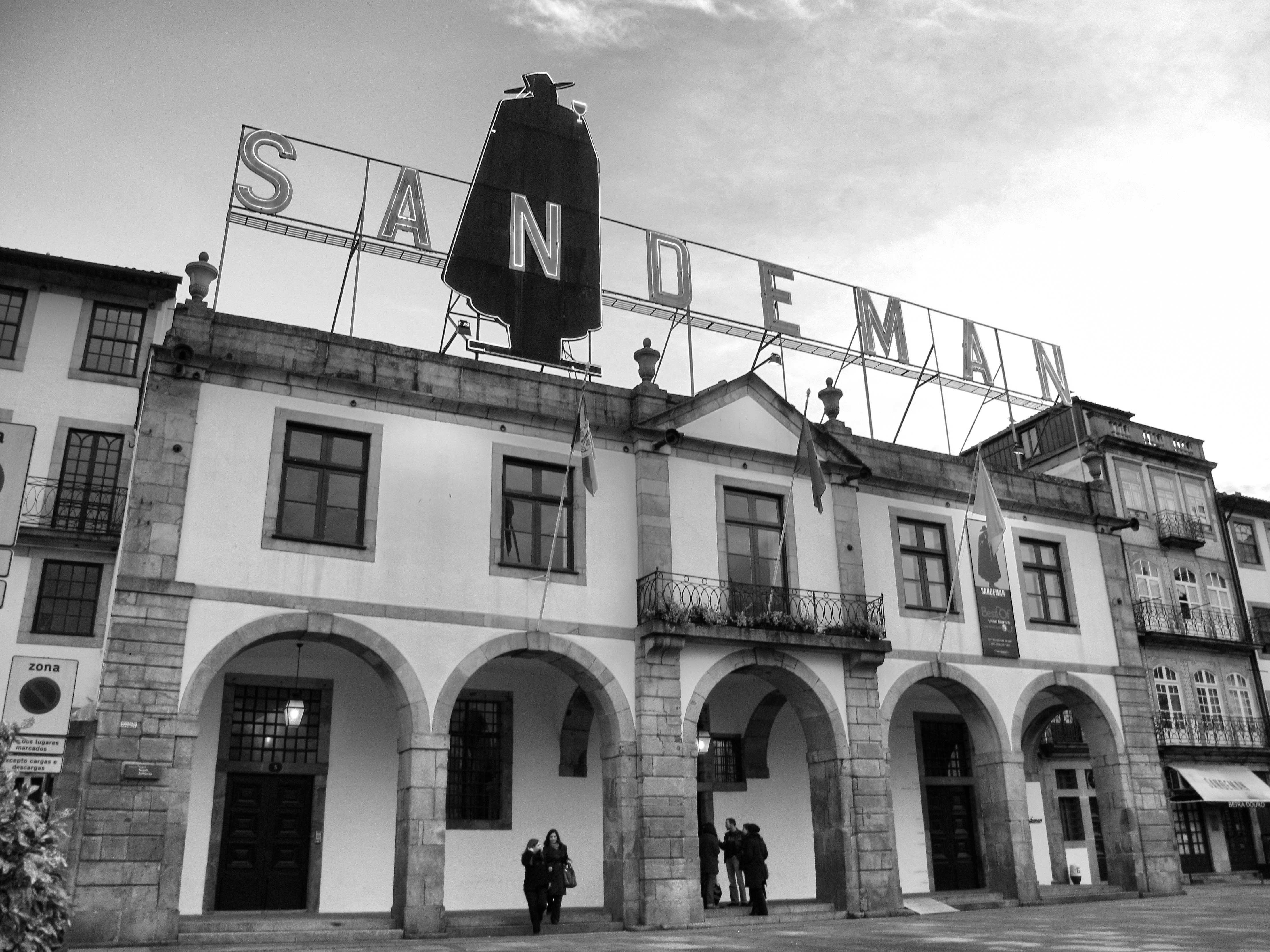
One of many traditional wine distilleries in Porto. Well, that is not entirely correct. The distilleries are on the other side of the river in Gaia. On paper, it is an independent city, but most consider it part of Porto anyway (and the wine is called port wine in the end, isn’t it?).
So, what is actually the story behind Portwine? It is firmer and sweeter to be more durable during long ship journeys. One day, an Englishman came to Porto, liked the local wine, and took a bottle as a souvenir to England. It turned out to be a hit, and Englishmen – being Englishmen – did start to settle down in Porto and make businesses out of the production and shipping of the wine. Now, this small local tradition has become truly global. You can visit these distilleries – like the above Sandeman – and taste all the wines! The 10-year-old Sandeman was my personal favorite.
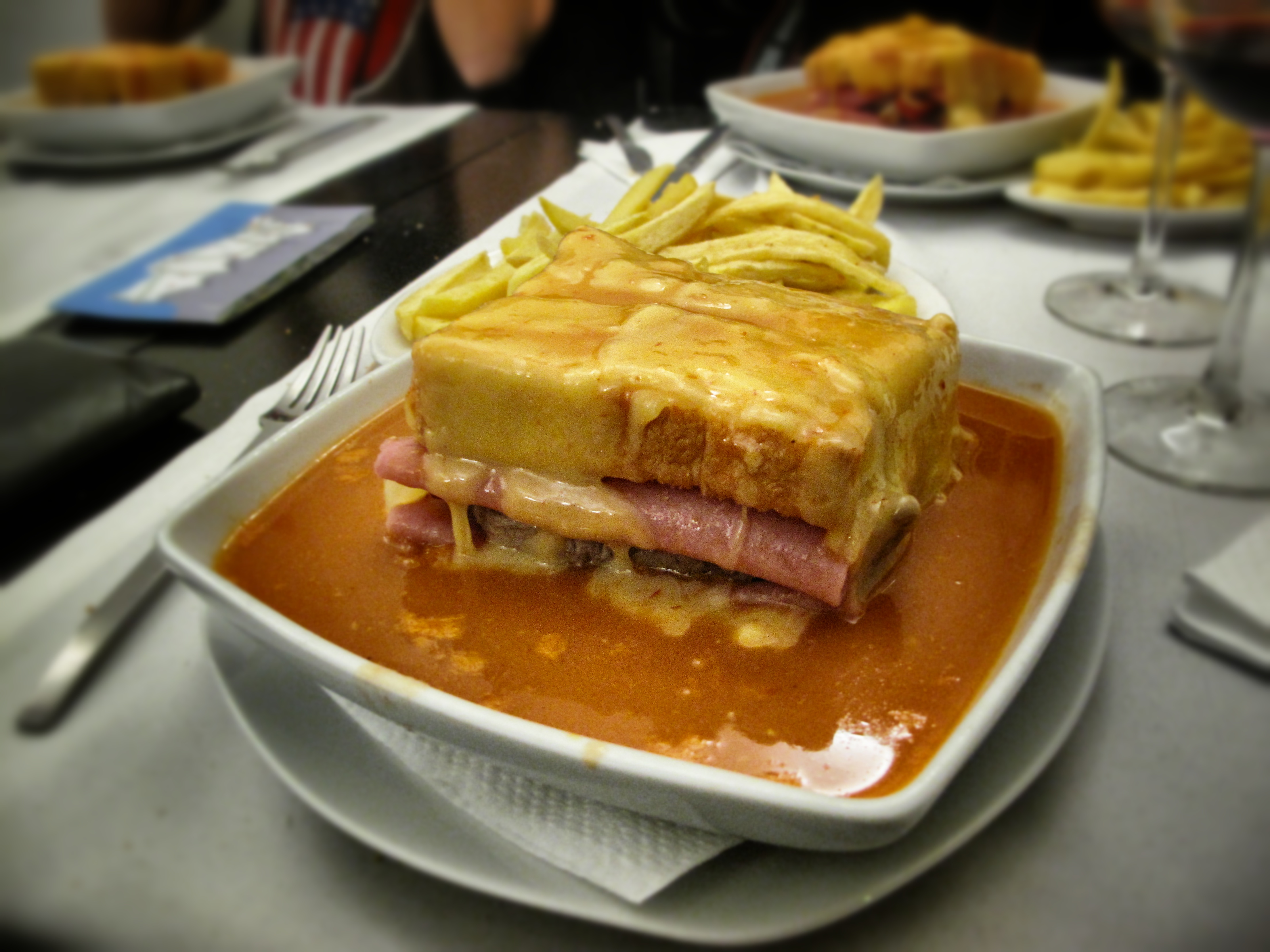
Let’s stay with food 🙂 Usually, I don’t like food pictures – we see enough of them in advertisements, and they make you hungry – but unfortunately, I guess I have to make you hungry right now. Because I feel like a Portugal recapture could not be complete without a picture of a gorgeous, gargantuan, excellent, good, deadly Francesinha.
So what is it? It is a toast with different kinds of meat in a cheese crust dunked into tomato/wine sauce (with about 2331859 calories). I’ve never heard of it before, and the story behind it is kind of great: In the fabulous 1920s, a man from Portugal once traveled to Paris and liked all the beautiful girls there (get it). That was a contrast for him as he only knew the not-so-outgoing (very catholic country) and skinny Portuguese girls. So he invented the Francesinha – small French – to make the Portuguese girls gain some weight and make them all hot 🙂 I guess it worked out quite well.
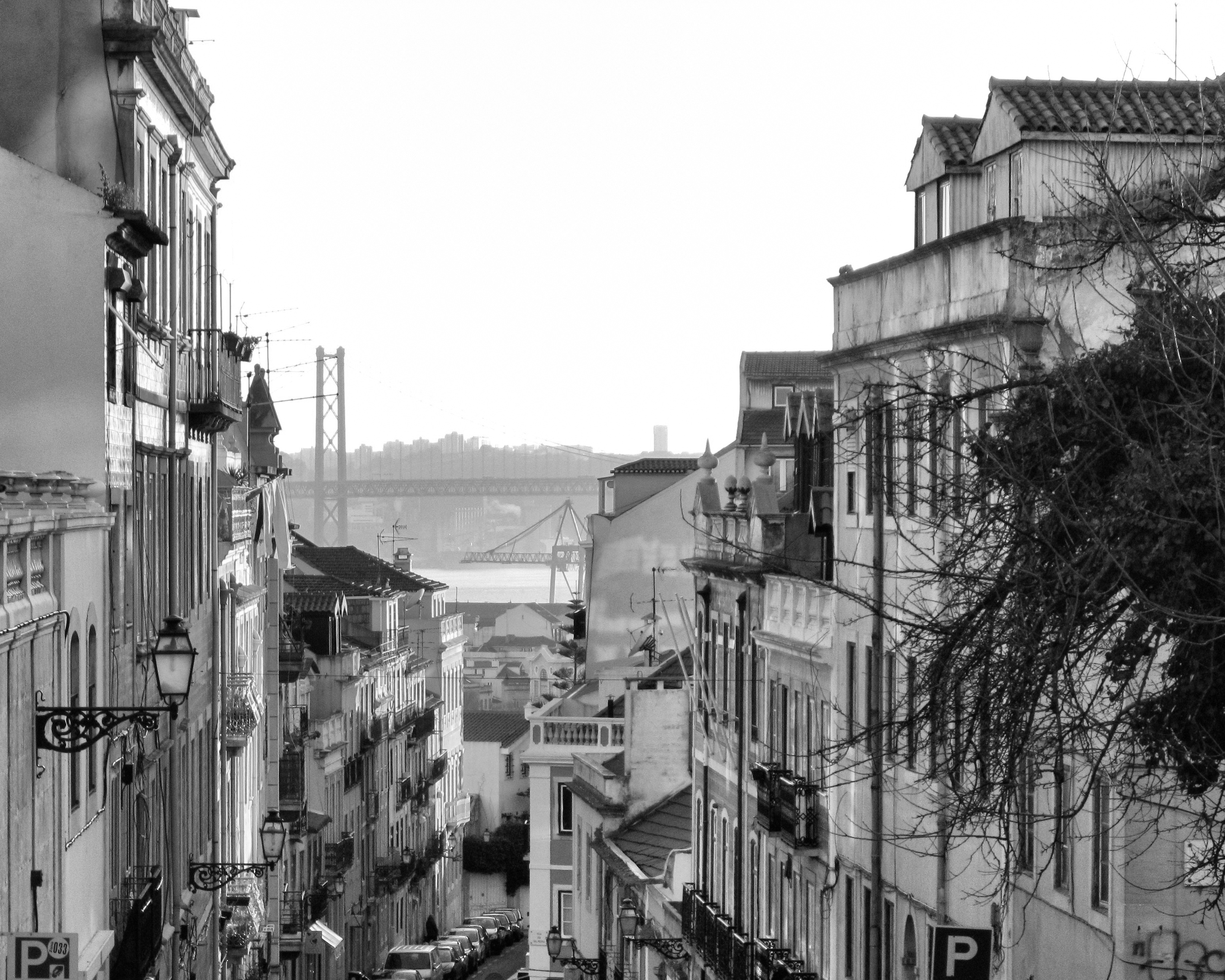
In the background, you see the bridge on April 25 in Lisboa. It is a magnificent bridge, which I discussed in a previous post. I guess the view speaks for itself.
February 2013 (amended in 2025)
Confronted with the Austrian winter, I embarked on a week-long journey to a warm and friendly place at the most western point of Europe. Portugal was excellent, and I would like to share my impressions in several posts. Here we go with the first one.
Striking and very interesting was the difference between Porto and Lisboa. One is the name-giver of the country, the other the capital. While Lisboa is undeniably a European metropole, it has a provincial charm to it. Being in the Baixa (downtown), you would think you are in an old 30.00+ town, but when you go up to one of the many (I say again, many) viewpoints, you will discover that you are indeed in a pulsating capital. Porto just screams life. These narrow streets are full of history, churches out of pure gold (which will take your breath away), superb restaurants, and lovely people. And port wine 😉
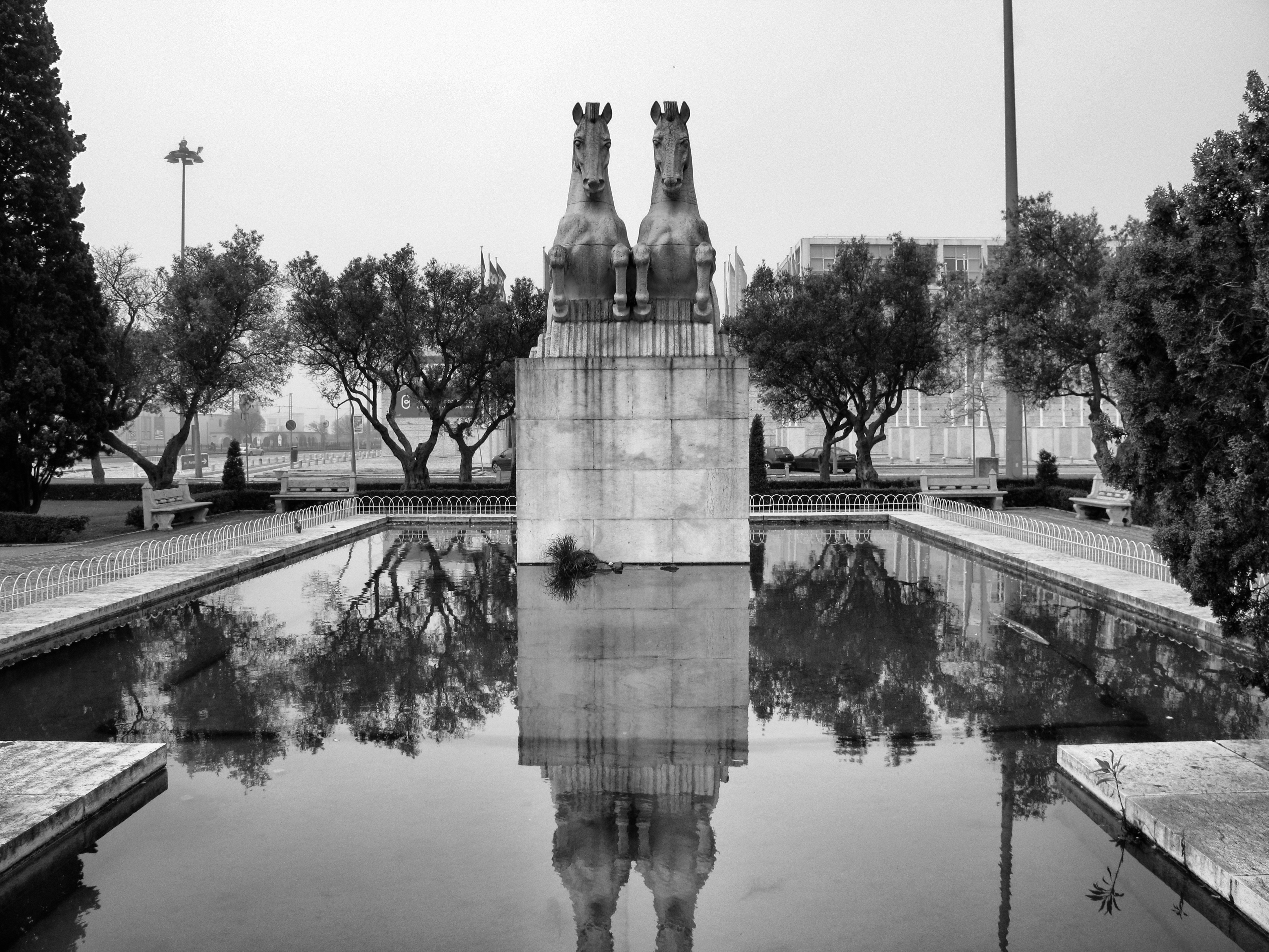
This statue stands before the Museum of Contemporary Art in Belém, Lisboa. Laying a little bit outside of the city core, Belém is an important cultural area. We slept in Belém for the first nights, and it was perfect to discover the sights here, like the Mosteiro dos Jeronimos (a beautiful monastery of the 16th century and World Heritage – see down below – ) and the Torre de Belem (tower from the same century and symbol of the city).
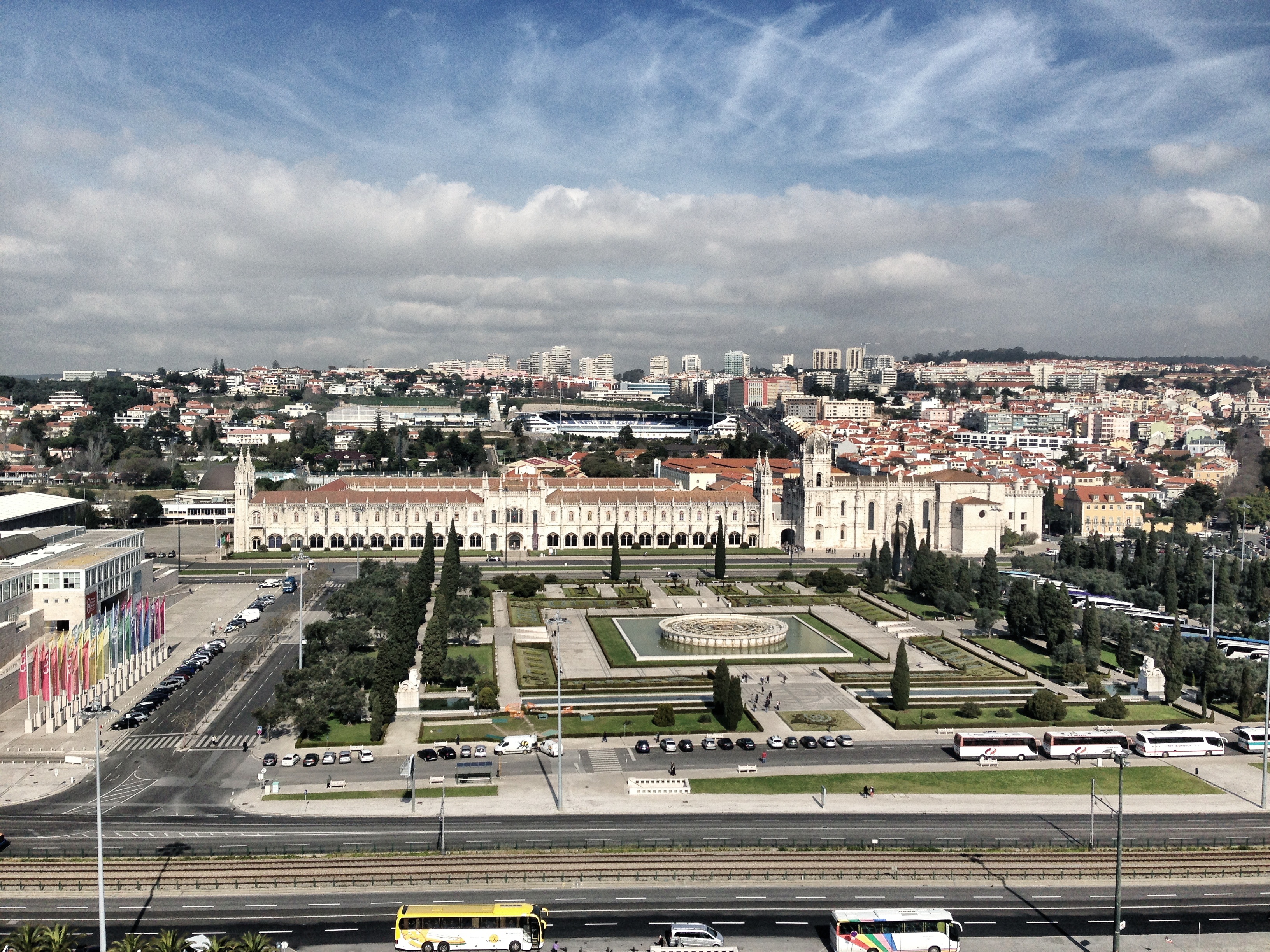
A bird view of Belém. You see the mentioned monastery. Once, Belém was situated outside the city. After the earthquake of 1755, there were ideas of rebuilding the destroyed Lisboa in Belém, which did not suffer as much from the catastrophe.
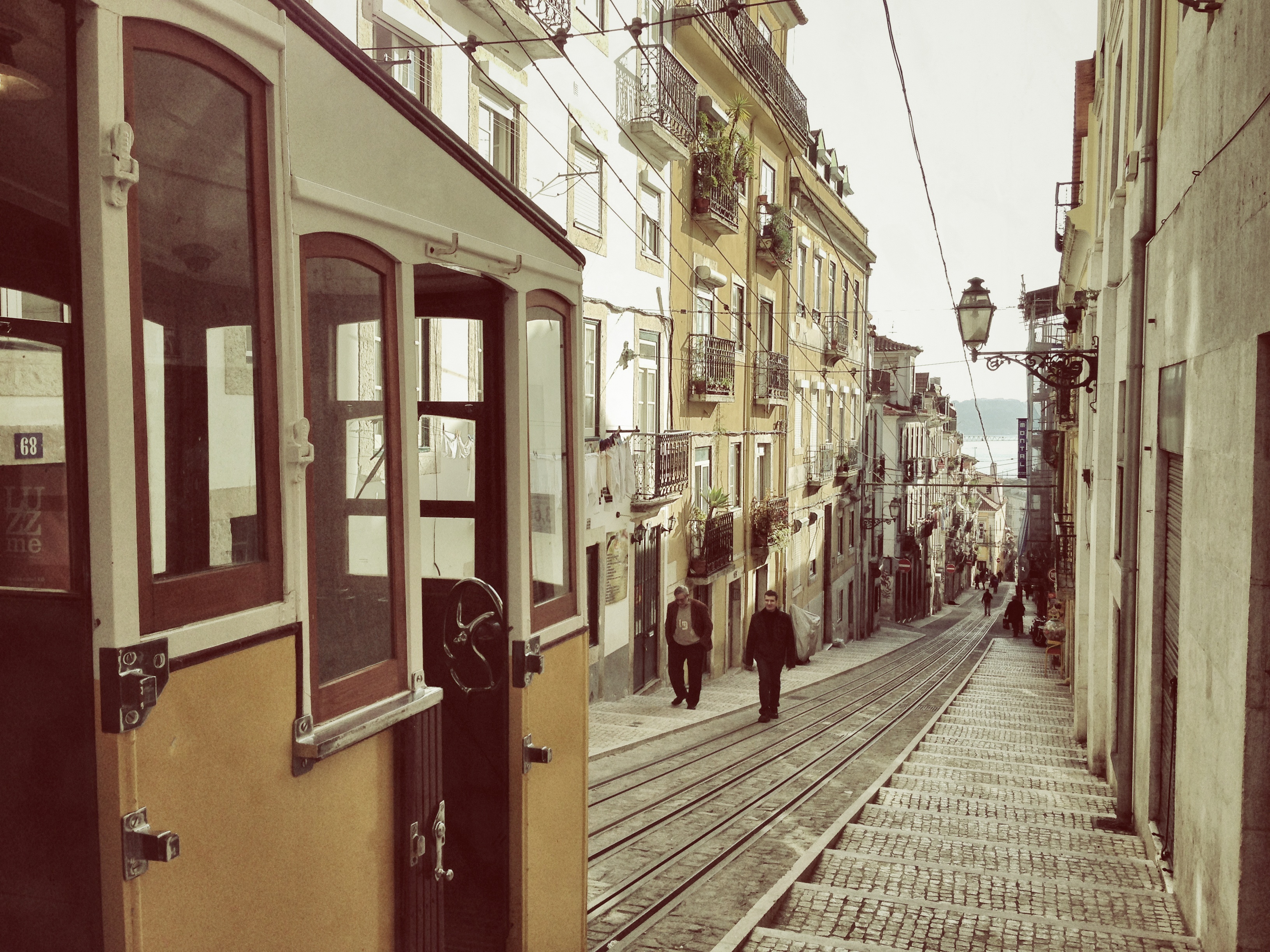
One must love these precious yellow trams. Especially the ones going from the lower parts of the city to the higher parts. The view is fantastic, and the atmosphere is unique. The center of Lisboa can be dived into a valley (Baixa) between two hills (Bairro Alto – seen here – and Alfama), the trams connecting them. A line crossing all these neighborhoods is Number 28.
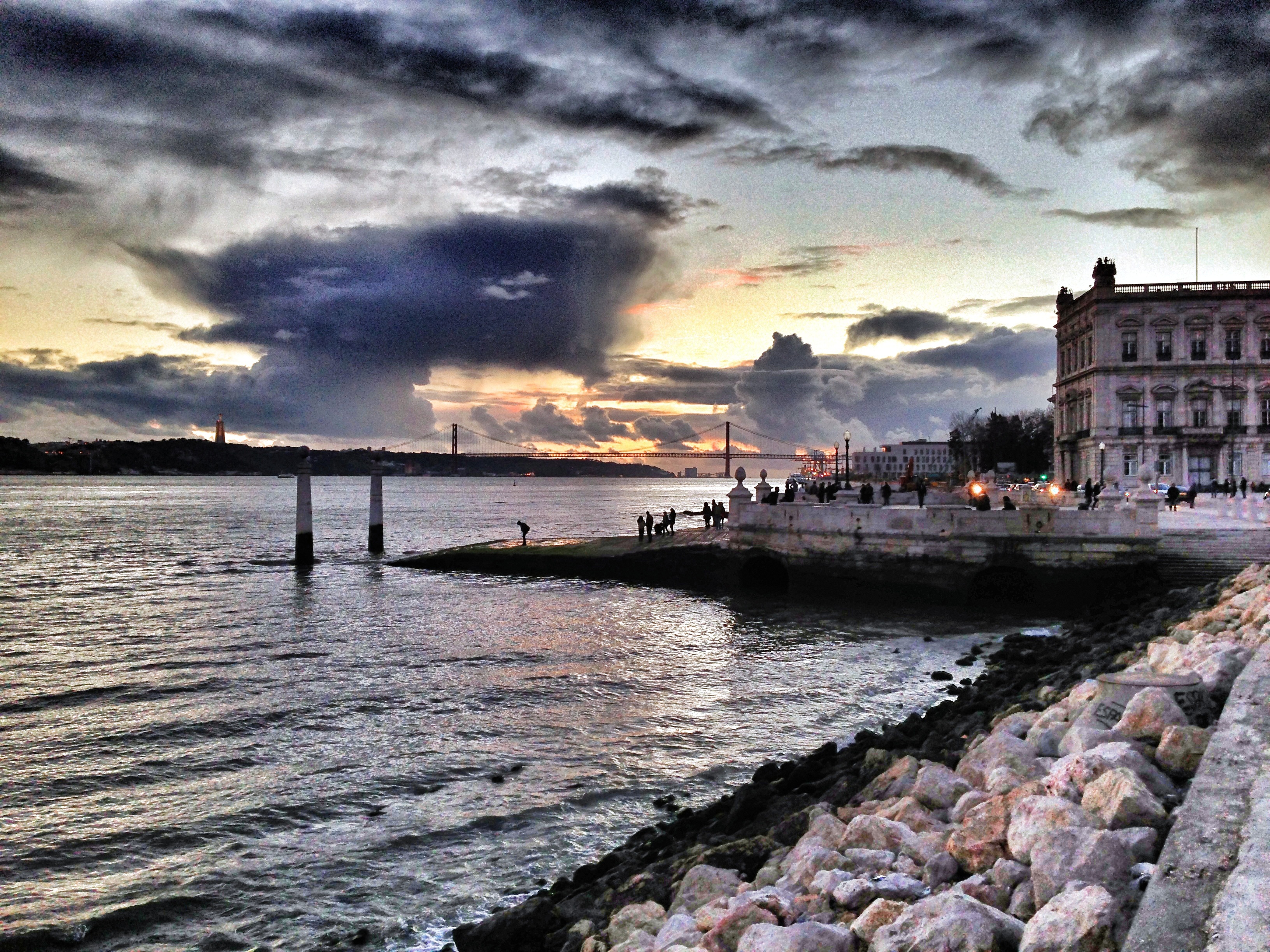
In the background, you see the 25 de Abril bridge connecting the independent city of Alameda with Lisboa. It is a suspension bridge often compared to the Golden Gate Bridge. In fact, it was built by the same company and constructed in a similar style because of the thread of earthquakes both cities are constantly facing.
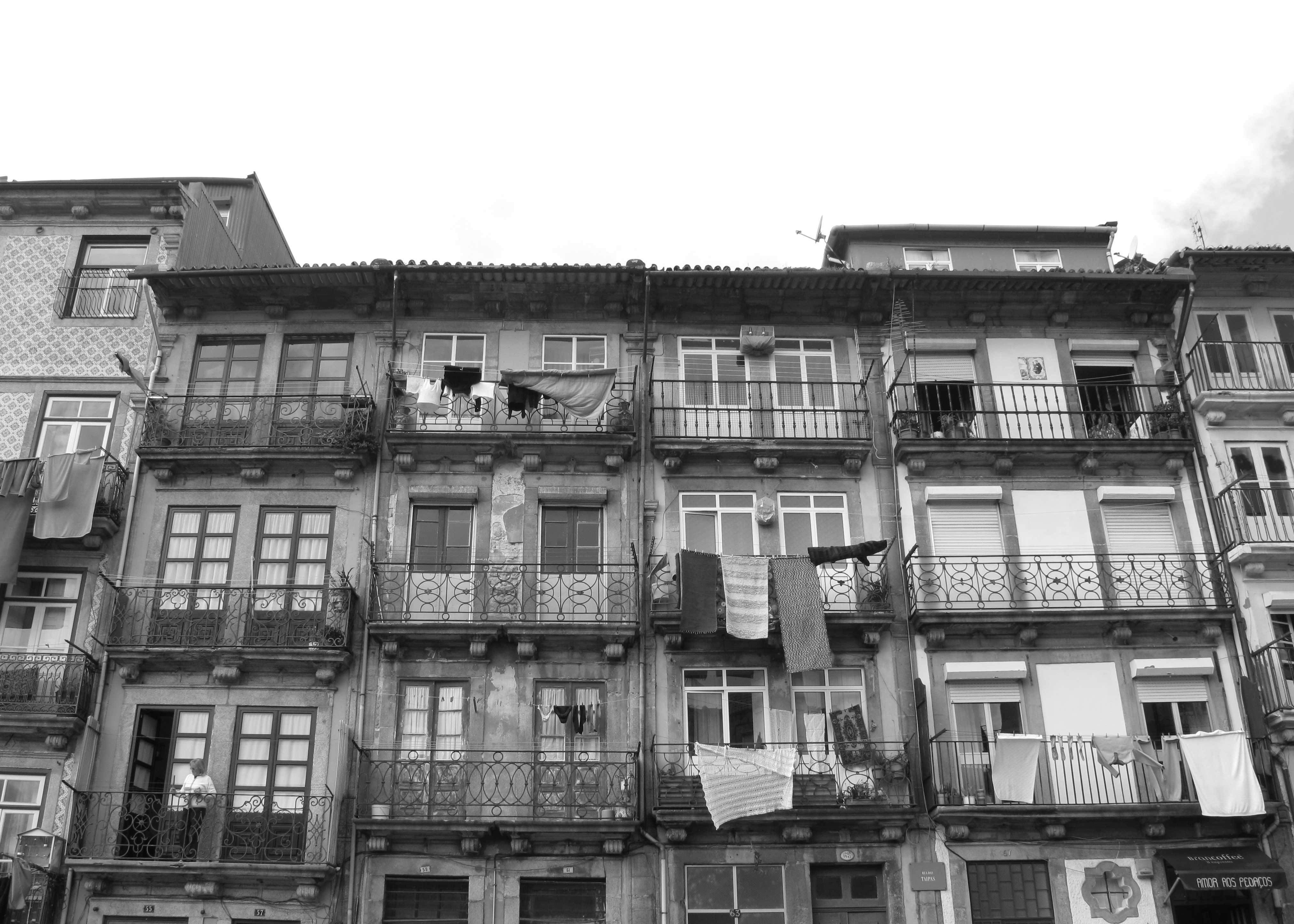
While the earthquake of 1755 could be felt in Porto, too, the city was not destroyed, and so are the houses much older. But besides that, the city’s buildings seem narrower and have a charm different from Lisboa.


 Michael Hoffman Photography